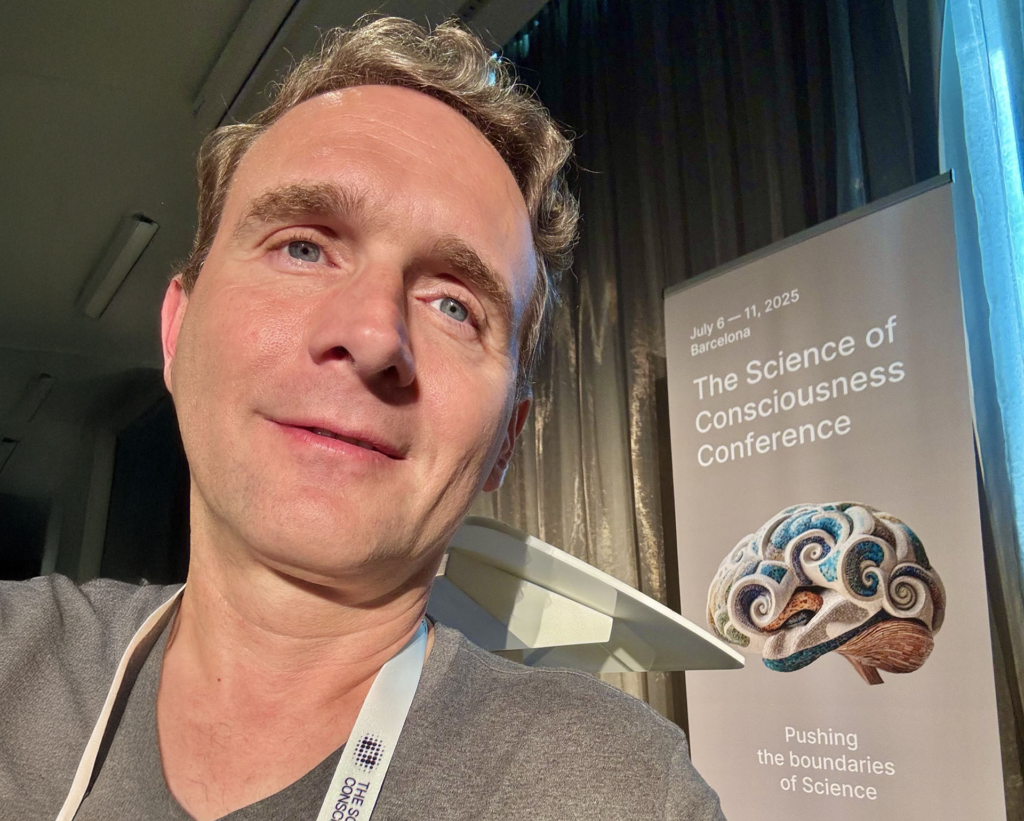
Daniel de Moraes Branco is a Brazilian neurologist and neuroscientist by training, a healthcare and biotechnology entrepreneur, and the author of Spiriduality: Spiritual Initiation for Rational People. His career has crossed fields that are usually kept apart: electrical engineering, clinical neurology, functional brain imaging, hospital strategy, digital health, biotechnology, consciousness studies and, more recently, public discussion of Non-Human Intelligence.
Branco is not primarily a UAP investigator. The documented record reviewed for this profile does not show him conducting instrumented UAP fieldwork, analysing recovered materials, investigating major sighting cases or publishing peer-reviewed UAP research. His relevance to UAPedia lies instead at an increasingly important boundary in the subject: the relationship between the brain, consciousness, anomalous experience and claims of interaction with intelligences whose nature is unknown.
He has written explicitly about NHI and has considered whether humanity’s encounter with increasingly capable artificial intelligence might provide conceptual preparation for encountering intelligence not originating with human beings. His importance to UAPedia therefore lies less in conventional case investigation than in the questions raised when neuroscience, subjective experience and theories of non-human consciousness intersect (Branco, n.d.-c).
That makes Branco an unusual figure in contemporary UAP discourse. His scientific credentials originate in practical neurological research carried out well before his public engagement with NHI. His later consciousness philosophy and NHI arguments belong to a different evidentiary category. Understanding him requires keeping those bodies of work connected historically while refusing to treat the authority of the first as proof of the second.
From electrical engineering to the brain
Branco’s own media biography states that he was born in Salvador, Bahia, and raised in Porto Alegre in southern Brazil. Because these early-life details come from his current biographical materials, they are best treated as self-reported rather than independently established here (Branco, n.d.-b).
In a 2026 interview, Branco described growing up in a strongly Catholic family in southern Brazil. He also recalled exposure to Brazil’s wider religious environment, including Spiritism and Afro-Brazilian traditions, although he did not describe himself as deeply committed to those traditions during his youth. Instead, his retrospective account presents intellectual curiosity as the enduring feature of his development (Awakened Magazine, 2026).
His first university direction was not medicine but electrical engineering at the Federal University of Rio Grande do Sul, UFRGS. His professional and academic records place those studies in the early 1990s. Branco has described working with microelectronics and computer-chip design before becoming increasingly interested in a biological information-processing system vastly more complicated than the circuits he was studying: the human brain.
He entered medicine at UFRGS in 1995 and graduated in 2000. An academic-derived professional record based on his Brazilian Lattes curriculum also documents his neurology residency at the Pontifical Catholic University of Rio Grande do Sul, PUCRS, from 2001 to 2003 (Escavador, n.d.).
Branco’s retrospective account presents the move from engineering to medicine as an attempt to understand consciousness through the machinery of the brain. The exact motivations behind a career decision decades earlier cannot be independently reconstructed, but the account is consistent with the research direction he subsequently pursued.
During medical training he also became involved in digital educational projects. His professional chronology records work on an electronic histology atlas, multimedia material about epilepsy and an early public-facing medical information service called Medicinal. His Brazilian academic-derived record also lists early work involving hypertext, histology education and multimedia applications for epilepsy, providing additional support for this technological strand of his early career (Escavador, n.d.).
Neurology, epilepsy and the variable human cortex
After medical school, Branco undertook his neurology residency at PUCRS and subsequently pursued doctoral research there.
Credential precision is important. Later profiles sometimes describe him simply as having a doctorate or PhD in neuroscience. PUCRS’s institutional record identifies the degree through its Postgraduate Programme in Medicine and Health Sciences, with research focused on functional neuroimaging, memory and neuroscience. The most precise description is therefore that Branco completed doctoral training in Medicine and Health Sciences focused on neuroscience and functional neuroimaging (Branco, 2006a).
His doctoral work was supervised by Jaderson Costa da Costa, with Harvard-affiliated neurosurgeon Alexandra Golby involved as co-supervisor. During the same general period, Branco worked on brain mapping at Brigham and Women’s Hospital and Harvard Medical School in Boston. His 2006 NeuroImage article lists his affiliation as the Department of Neurosurgery at Brigham and Women’s Hospital and Harvard Medical School (Branco et al., 2006).
The clinical problem underlying much of this research was both practical and consequential. Epilepsy and brain-tumour surgery can require removal of tissue close to regions supporting movement, language or memory. Surgeons therefore need to know not merely where those functions are usually represented in an anatomical textbook, but where they are represented in the particular person undergoing surgery.
That distinction became central to Branco’s early cortical-mapping work.
In 2003, Branco and colleagues published a study of sensorimotor organisation in patients undergoing perirolandic epilepsy surgery. The researchers analysed 43 cortical maps obtained from 36 patients using electrical cortical stimulation. Seven patients, representing 19.4 per cent of the sample, showed variations in the organisation of the primary motor cortex. Four showed overlapping functional areas, two showed inverted arrangements, and one displayed both characteristics (Branco et al., 2003).
The study challenged an overly rigid interpretation of the classic motor homunculus, the familiar representation in which different parts of the body are arranged systematically across the motor cortex. It did not demonstrate that epilepsy caused the observed arrangements, nor did it invalidate the general principle of functional cortical organisation. What it demonstrated was clinically important variability in functional organisation among individual patients, including those undergoing epilepsy surgery.
For a neurosurgeon, variability itself matters. An averaged anatomical model cannot always substitute for mapping the actual person whose brain is being operated upon.
Memory lateralisation and the weighted-voxel problem
Branco’s most distinctive methodological contribution concerned functional MRI and the lateralisation of memory.
The brain’s hemispheres do not always contribute equally to cognitive functions. In patients being evaluated for temporal-lobe surgery, clinicians may therefore need to estimate whether important memory functions are disproportionately represented on one side. Removing diseased tissue can reduce seizures, but it can also produce serious cognitive impairment if the tissue being removed supports functions that the opposite hemisphere cannot adequately sustain.
Functional MRI offered a non-invasive way to investigate this organisation, but conventional laterality calculations introduced a statistical problem. Many approaches counted only voxels exceeding a selected statistical threshold. A voxel immediately above that threshold contributed to the calculation, while a voxel immediately below it did not. Changing the threshold could therefore change the apparent degree of hemispheric dominance.
Branco and his collaborators proposed an approach using the broader distribution of positive statistical values, weighting voxels according to their statistical significance. Rather than treating brain activity as a binary distinction between activated and non-activated voxels, the method incorporated information from the wider distribution.
Their 2006 NeuroImage paper studied 13 healthy participants and five epilepsy patients. It found that weighted laterality indices were less variable than indices based solely on suprathreshold voxel counts. Memory for words tended towards left lateralisation, visual patterns towards the right, and scenes occupied a more intermediate position. In the small patient sample, fMRI memory lateralisation obtained with the weighted approach was consistent with results from the intracarotid amobarbital procedure (Branco et al., 2006).
The method subsequently entered the methodological literature on fMRI lateralisation. A 2017 systematic review described t-weighting as a widely used threshold-independent technique and cited Branco and colleagues’ 2006 work (Bradshaw et al., 2017). This provides demonstrable evidence of methodological uptake beyond the original publication rather than relying on later descriptions by Branco himself.
This is one of the strongest grounds for describing Branco as a neuroscientist rather than simply a physician who participated in neuroscience. His research proposed and evaluated a particular analytical method that later researchers discussed as part of the wider methodological toolkit for functional lateralisation.
Bringing imaging into the operating theatre
Branco also participated in research integrating functional imaging with image-guided neurosurgery.
A 2006 paper co-authored with James O’Shea, Stephen Whalen, Nicole Petrovich, Kyle Knierim and Alexandra Golby described the integration of pre-operative fMRI with neuronavigation and intra-operative electrical cortical stimulation. The purpose was to combine non-invasive functional information with direct mapping during surgery near the eloquent cortex (O’Shea et al., 2006).
The authors did not present fMRI as a replacement for electrical cortical stimulation. Direct stimulation remained the reference method for identifying functional cortex during surgery. Instead, the researchers described fMRI as a complementary planning and navigation tool that could be co-registered with structural imaging and compared with stimulation findings.
They proposed that better integration of these methods might help limit the size or duration of craniotomies and reduce strain on patients, while explicitly stating that further research was needed to demonstrate clinical efficacy.
A separate 2008 study, co-authored by Denise da Fontoura, Branco and colleagues, examined language dominance in 13 patients with refractory temporal-lobe epilepsy. It compared functional MRI with dichotic listening, a behavioural procedure in which different auditory stimuli are presented simultaneously to the two ears.
The study reported significant correlations between the fMRI lateralisation index and measures derived from dichotic listening. The authors concluded that the less expensive, non-invasive listening test might provide a useful supplementary tool for evaluating language dominance in presurgical epilepsy patients (da Fontoura et al., 2008).
Taken together, this phase of Branco’s career was firmly situated within applied clinical neuroscience. Its purpose was not to solve consciousness as a philosophical problem. It was to map neurological function accurately enough to improve decisions made around living human brains.
What brain mapping could and could not answer
The distinction between Branco’s neuroscience and his later philosophy is essential.
His neurological research demonstrated measurable relationships between tasks, neural signals and clinical functions. Electrical stimulation could evoke observable motor responses. Functional MRI could identify statistical patterns associated with memory encoding or language tasks. Analytical methods could estimate the degree of hemispheric asymmetry.
Those studies did not demonstrate that the brain creates consciousness. Equally, they did not demonstrate that consciousness exists independently of the brain. The experiments were not designed to distinguish between those metaphysical possibilities.
Branco’s later argument begins with a different problem. Brain imaging can identify neural activity correlated with pain, memory, visual experience or emotion, but the measurement is not itself the subjective experience. A researcher can measure neural processes associated with pain, yet the painfulness of pain remains directly accessible only to the individual experiencing it.
In later interviews, Branco treats this distinction between third-person measurement and first-person experience as philosophically fundamental. He argues that neuroscience can study correlates of conscious experience without directly measuring the experience itself (Awakened Magazine, 2026).
That is a legitimate problem in the philosophy of mind, but it does not force one particular solution. The existence of an explanatory gap between neural measurement and subjective experience does not itself establish that consciousness precedes physical reality. Branco eventually adopted that interpretation, but it belongs to his philosophical framework rather than to the empirical findings of his neuroimaging studies.
From the laboratory to Wharton
By the middle of the 2000s, Branco was beginning to move away from a conventional academic-neuroscience career.
In 2006 he entered the Wharton School of the University of Pennsylvania, completing an MBA in 2008. Wharton’s own alumni material lists Daniel Branco among its full-time MBA class of 2008, while Instituto Ling independently places the beginning of his Wharton studies in 2006 (Wharton School of the University of Pennsylvania, 2018; Instituto Ling, 2026).
A 2026 profile published by Instituto Ling, which had supported his Wharton studies, describes his subsequent movement into hospital strategy, consulting and entrepreneurship. He worked in healthcare management in Brazil, including roles associated with Hospital Israelita Albert Einstein and Hospital Mãe de Deus, before devoting more of his career to entrepreneurial ventures.
The change was substantial, but the systems orientation of his earlier training remained visible. Branco increasingly approached healthcare as an information and organisational problem: expertise had to move between clinicians and patients, institutions had to communicate beyond the consulting room, and technology had to support continuing relationships rather than isolated medical encounters.
Building digital-health companies
In 2012, Branco launched Medicinia, a digital-health venture initially designed as a direct information channel between physicians and members of the public.
Contemporary reporting from October 2012 described the service as an educational platform on which registered physicians answered health questions using medical literature. The model explicitly excluded online diagnosis and prescription. Branco was identified at the time as the creator of the service (TI Inside, 2012).
The business later evolved. By 2020, Branco was describing Medicinia as a clinical relationship-management platform supporting ongoing communication between healthcare organisations, physicians and patients, including medication adherence, diagnostic follow-up and post-discharge care (Medical Travel & Digital Health News, 2020).
His self-published professional chronology also records later involvement with ventures including DrChat and Ponto.Care. Detailed dates, responsibilities and achievement claims for these companies depend partly on Branco’s own career materials and should therefore be distinguished from independently verified institutional records.
By 2026, his activity had shifted further into biotechnology. A September 2026 Instituto Ling profile reports that Branco worked in strategy and corporate development at Artiva Biotherapeutics from 2023 until June 2026. The same profile describes his continuing work with BioAlma, an artificial-intelligence platform focused on biotechnology market intelligence, and Samba Trials, which seeks to facilitate international clinical research in Brazil (Instituto Ling, 2026).
Samba Trials’ own materials identify Branco as a founder and describe the organisation as a BioAlma company. Because this is an organisational primary source, it establishes how the venture represents Branco’s role rather than serving as an independent assessment of the venture’s performance (Branco & Gullo, 2026).
Consciousness before the near-death experience
It would be misleading to portray Branco’s interest in consciousness as beginning with the medical crisis that later became central to his personal story.
His self-published professional chronology records an invited April 2005 presentation titled “Science and Consciousness: Thinking and Rethinking Human Consciousness”, delivered while he was still engaged in brain-mapping research (Branco, n.d.-a).
Because the specific lecture chronology is presently established primarily through Branco’s own current career record, it should not be treated as equivalent in evidentiary independence to his indexed scientific publications. It nevertheless supports the narrower conclusion that, according to his published professional chronology, he was discussing consciousness publicly before his later near-death experience.
His subsequent accounts describe growing dissatisfaction with the assumption that increasingly precise maps of neural activity would necessarily answer the question that had originally interested him. He came to regard neuroscience as highly successful at discovering correlations between brain activity and experience while still leaving unresolved why physical processes should be accompanied by subjective awareness.
This concern resembles the longstanding problem of explaining phenomenal consciousness, although Branco eventually developed his own explicitly idealist answer to it.
The reported near-death experience
Branco has said that at the age of 41 he suffered a severe heart attack followed by what he interprets as a near-death experience.
In a 2026 interview, he reported preserved subjective awareness during approximately ten minutes that he describes as physical unconsciousness following the heart attack. His account is comparatively sparse. He reports no conventional life review, no elaborate landscape and no remembered personal identity or language. Instead, he describes a largely contentless state accompanied by an exceptionally powerful sense of peace (Awakened Magazine, 2026).
The evidentiary boundary is important. That Branco reports the experience is established by his public testimony. The exact duration, physiological state and neurological conditions surrounding it have not been independently reconstructed in the sources reviewed for this biography.
No hospital records, contemporaneous cardiac traces, resuscitation documentation or neurological observations have been examined here. It therefore cannot be concluded from the available documentation that conscious awareness continued during a particular objectively verified state of absent or severely impaired brain function.
Nor does the absence of those records make the experience biographically insignificant. Branco identifies the event as transformative and says that it altered his relationship with death, consciousness and his earlier scientific assumptions. Its demonstrable significance lies in what it did to the subsequent direction of his thought.
For UAP studies, the distinction between experience and explanation is particularly useful. Comparative discussions of near-death experiences and anomalous UAP encounters identify recurring reports involving altered experiences of time, perceived presences, unusual forms of communication and lasting changes in worldview. UAPedia’s treatment of this overlap presents it as a phenomenological comparison rather than evidence that NDEs and UAP encounters necessarily share a common mechanism (UAPedia, n.d.-a). Similarity of reported experience therefore warrants comparison, but not an assumption of common cause.
Spiriduality and philosophical idealism
In May 2024, Branco published Spiriduality: Spiritual Initiation for Rational People through DMBranco Inc. The paperback edition is listed at 170 pages (Branco, 2024).
The book’s central question is whether the brain produces consciousness or consciousness is, in some sense, more fundamental than the brain. Branco contrasts third-person reality, which can be measured and publicly compared, with first-person reality, which consists of subjective experience.
Pain is one of his recurring examples. Neural activity associated with pain can be measured, but the lived quality of pain is experienced only by the subject. From that distinction he asks whether consciousness should be understood as an emergent property of matter or as something ontologically more basic (Awakened Magazine, 2026).
Branco adopts a form of philosophical idealism. In his model, consciousness is fundamental and physical reality is secondary or derivative. He has also used language resembling filter or localisation models of mind, in which the brain constrains or localises a wider consciousness into the particular experience of an individual organism.
This general family of ideas long predates Branco. William James explicitly developed a transmission theory of consciousness in the late nineteenth century, and historical scholarship traces related filter or transmission concepts to earlier philosophical influences and contemporaries including Gustav Fechner and Frederic W. H. Myers (Hawkins, 2011). Branco’s contribution is therefore not the invention of the proposition that brains might filter rather than manufacture consciousness.
What is distinctive is his synthesis. He connects the idea to his experiences in clinical brain mapping, his later healthcare career, his reported near-death experience and a practical philosophy intended for readers who regard themselves as scientifically or rationally oriented.
The sources reviewed for this biography do not show substantial scholarly uptake of Spiriduality within mainstream consciousness science. It is a philosophical and popular work rather than a peer-reviewed scientific monograph, and its central metaphysical propositions have not been experimentally established.
Daniel Branco and Non-Human Intelligence
Branco’s clearest direct contribution to UAP discourse is his UAPedia perspective essay “Who’s Afraid of the Big Bad NHI?” (Branco, n.d.-c).
The essay begins by distinguishing intelligence from consciousness. Intelligence concerns information processing, learning and goal-directed capability. Consciousness concerns subjective awareness. In Branco’s framework, one does not automatically imply the other.
This distinction allows him to compare the rise of advanced artificial intelligence with the possibility of encountering forms of NHI that might exceed human intellectual capabilities while differing profoundly from human consciousness.
Branco then advances a more speculative proposal. Humanity’s experience with increasingly capable artificial intelligence, he suggests, could psychologically familiarise people with the experience of interacting with an intelligence that exceeds their own in important domains.
He considers a further possibility: that NHI might somehow be involved in technological or psychological preparation for wider contact. Importantly, Branco characterises this scenario as a fragile idea and acknowledges that it rests on a chain of assumptions rather than established evidence (Branco, n.d.-c).
The proposal depends upon multiple unresolved premises. NHI would have to exist in a relevant form, interact with humanity, possess discernible intentions and potentially influence human development. Branco’s neurological research establishes none of those propositions.
His proposed response to the possibility of superior intelligence is principally ethical rather than military. He argues for greater self-knowledge, agency, responsibility and civilisational maturity. Within that framework, readiness for contact is not merely a problem of engineering or defence. It is also a question of what kind of civilisation humanity would represent in such an encounter.
That position places him alongside a wider current in UAP research that treats consciousness as potentially relevant to anomalous interaction. Reports of non-verbal communication, altered states, apparent telepathic impressions and cognition-linked effects recur within parts of the close-encounter literature. Their recurrence makes them legitimate objects of comparative study, but recurrence alone does not establish an external mechanism or prove NHI involvement.
Branco’s work is best located at this exploratory boundary. He proposes conceptual frameworks for thinking about intelligence, consciousness and contact. He has not experimentally demonstrated that UAP communicates through consciousness, that NHI is responsible for a particular UAP event, or that human technological development is being directed by an external intelligence.
Why his neuroscience matters to UAP studies
The relevance of Branco’s scientific background to UAP research is indirect but potentially useful.
Close-encounter reports sometimes include changes in perception, unusual cognitive states, memory disruption, apparent telepathic impressions, altered experiences of time and enduring changes in worldview. Some accounts also contain reports of neurological or physiological effects.
If a subset of such reports involves objective external events, investigators face at least three different problems: what happened outside the witness, what happened within the witness’s nervous system, and how the witness interpreted the combined experience.
Branco’s early neuroscience does not provide evidence for NHI, but it illustrates an important methodological principle. Individual brains cannot always be treated as interchangeable examples of a single anatomical template. His cortical-mapping work documented meaningful individual variability, while his laterality research attempted to improve methods for analysing functional organisation in particular brains (Branco et al., 2003; Branco et al., 2006).
Applied to anomalous-experience research, that lesson argues against simplistic neurological signatures. A structural or functional finding in one experiencer cannot automatically be treated as a universal marker of contact. Conversely, individual neurological variation does not make measurement irrelevant. It makes comparison groups, longitudinal data, careful clinical histories and restraint in causal interpretation more important.
His distinction between neural correlate and subjective content is similarly relevant. A brain scan obtained during or after an anomalous experience could reveal measurable physiological information without settling what caused the event or what its subjective contents represented.
The nervous system may therefore constitute part of the evidence without necessarily constituting the entire explanation.
Strengths and limitations
Branco’s unusual strength as a public commentator is the breadth of the environments in which he has worked.
He has participated in electrical cortical stimulation, functional neuroimaging and clinically oriented brain mapping. He later worked in hospital strategy, digital health, entrepreneurship and biotechnology. When he discusses the limits of scientific measurement, he does so after substantial experience with measurement rather than from complete distance from experimental science.
That background should not be converted into authority beyond its proper scope.
His principal peer-reviewed neuroscience belongs mainly to an earlier phase of his career. His later writing on idealism, spirituality and NHI does not emerge from a peer-reviewed experimental programme testing those propositions. Scientific expertise in functional brain mapping cannot itself verify metaphysical claims about universal consciousness or speculative claims concerning NHI intentions.
Source quality also varies across different parts of his biography. His scientific publications and doctoral work can be traced through academic and institutional records. His Wharton MBA is independently documented, and contemporary reporting supports major parts of his digital-health career. Other details about early projects, particular executive responsibilities, personal motivations and the development of his philosophy rely more heavily on retrospective interviews and Branco’s own professional materials.
The same caution applies to his near-death experience. The testimony is his and can be accurately documented as such. The precise medical conditions under which the reported awareness occurred remain unverified in the sources available for this biography.
The larger intellectual trajectory
Branco’s career can be understood as a movement through three progressively wider questions.
The first was functional: where, in an individual brain, are movement, language and memory represented well enough for a surgeon to operate safely?
The second was systemic: how can medicine, information and technology be organised so that healthcare functions more effectively beyond the boundaries of a traditional consultation?
The third is ontological: what is consciousness, and what does its existence imply about the nature of reality and the possibility of radically different forms of intelligence?
The first question produced conventional scientific research. The second produced institutional work and companies. The third led Branco into territory where philosophy, personal experience, spirituality and anomalous claims become increasingly important.
Those phases should neither be artificially separated nor collapsed into one another. His later philosophy is easier to understand in light of his earlier neuroscience, but his neuroscience does not prove his later philosophy.
Legacy in progress
Daniel Branco’s most securely demonstrated scientific contribution lies in clinically oriented human brain mapping, particularly the study of motor-cortex variability and methods for estimating functional lateralisation from fMRI data.
His weighted-distribution approach entered subsequent methodological literature and was later discussed among threshold-independent methods for determining functional lateralisation. That is a tangible scientific legacy, even if it belongs to a specialised area rather than constituting a general theory of brain organisation.
His entrepreneurial career shows a parallel concern with the movement of information through complex systems. From early online medical projects to Medicinia and later biotechnology initiatives, his work repeatedly returned to the relationship between technical knowledge, human decision-making and practical access.
His third career, still developing, is that of a public thinker on consciousness.
Here his influence is harder to quantify. Spiriduality, his consciousness-oriented educational work and his NHI commentary represent an attempt to construct a worldview in which subjective experience is treated as fundamental rather than secondary.
For UAPedia, Branco matters most as a bridge figure.
He does not provide evidence that resolves the origin of UAP. He does not offer a validated neurological biomarker of contact. He has not demonstrated that consciousness constitutes an independent communication medium for NHI.
What he does provide is a useful intellectual tension.
His scientific career demonstrates how much can be learned by mapping the brain with increasing precision. His later philosophy asks whether even a complete functional map would contain an explanation for the existence of the person who experiences it. His NHI writing extends the problem outward: if humanity encounters an intelligence radically different from itself, might understanding intelligence eventually require a more adequate theory of consciousness as well?
The answer remains unresolved. That boundary between demonstrated neuroscience, human experience and open philosophical inquiry is where Daniel Branco’s contribution to contemporary UAP discourse is most significant.
Reference
Awakened Magazine. (2026). What happens when a rational neuroscientist has a near-death experience? An interview with Dr. Daniel Branco. https://awakenedmagazine.com/what-happens-when-a-rational-neuroscientist-has-a-near-death-experience-an-interview-with-dr-daniel-branco/
Bradshaw, A. R., Bishop, D. V. M., & Woodhead, Z. V. J. (2017). Methodological considerations in assessment of language lateralisation with fMRI: A systematic review. PeerJ, 5, e3557. https://doi.org/10.7717/peerj.3557
Branco, D. de M. (2006a). Desenvolvimento da técnica de voxels ponderados para lateralização da memória por ressonância magnética funcional [Doctoral thesis, Pontifícia Universidade Católica do Rio Grande do Sul]. Programa de Pós-Graduação em Medicina e Ciências da Saúde. https://repositorio.pucrs.br/dspace/handle/10923/4329
Branco, D. de M. (2024). Spiriduality: Spiritual initiation for rational people. DMBranco Inc.
Branco, D. de M. (n.d.-a). Career. Daniel Branco. Self-published professional chronology. https://www.danielbranco.com/career.html
Branco, D. de M. (n.d.-b). Media. Daniel Branco. Self-published biographical and media materials. https://www.danielbranco.com/media.html
Branco, D. de M. (n.d.-c). Who’s afraid of the big bad NHI? UAPedia. https://uapedia.ai/wiki/whos-afraid-of-the-big-bad-nhi/
Branco, D. M., Coelho, T. M., Branco, B. M., Schmidt, L., Calcagnotto, M. E., Portuguez, M., Paglioli Neto, E., Paglioli, E., Palmini, A., Lima, J. V., & da Costa, J. C. (2003). Functional variability of the human cortical motor map: Electrical stimulation findings in perirolandic epilepsy surgery. Journal of Clinical Neurophysiology, 20(1), 17–25. https://doi.org/10.1097/00004691-200302000-00002
Branco, D. M., Suarez, R. O., Whalen, S., O’Shea, J. P., Nelson, A. P., da Costa, J. C., & Golby, A. J. (2006). Functional MRI of memory in the hippocampus: Laterality indices may be more meaningful if calculated from whole voxel distributions. NeuroImage, 32(2), 592–602. https://doi.org/10.1016/j.neuroimage.2006.04.201
Branco, D., & Gullo, S. (2026, April 20). Rare disease clinical trials in Brazil. Samba Trials. https://sambatrials.com/therapeutic-areas/rare-disease/
da Fontoura, D. R., Branco, D. de M., Anés, M., da Costa, J. C., & Portuguez, M. W. (2008). Language brain dominance in patients with refractory temporal lobe epilepsy: A comparative study between functional magnetic resonance imaging and dichotic listening test. Arquivos de Neuro-Psiquiatria, 66(1), 34–39. https://doi.org/10.1590/S0004-282X2008000100009
Escavador. (n.d.). Daniel de Moraes Branco. Academic-derived professional profile based on Brazilian curriculum records. https://www.escavador.com/sobre/759936/daniel-de-moraes-branco
Hawkins, S. L. (2011). William James, Gustav Fechner, and early psychophysics. Frontiers in Physiology, 2, 68. https://doi.org/10.3389/fphys.2011.00068
Instituto Ling. (2026, September 3). Engenheiro da mente: Daniel Branco entre a Medicina, a Biotecnologia e a Filosofia. https://institutoling.org.br/bolsas-de-estudo/blog/mbampa/engenheiro-da-mente-daniel-branco-entre-a-medicina-a-biotecnologia-e-a-filosofia
Medical Travel & Digital Health News. (2020, February 11). Spotlight interview: Daniel Branco, M.D., founder, Medicinia. https://medicaltraveltoday.com/spotlight-interview-daniel-branco-m-d-founder-medicinia/
O’Shea, J. P., Whalen, S., Branco, D. M., Petrovich, N. M., Knierim, K. E., & Golby, A. J. (2006). Integrated image- and function-guided surgery in eloquent cortex: A technique report. The International Journal of Medical Robotics and Computer Assisted Surgery, 2(1), 75–83. https://doi.org/10.1002/rcs.82
TI Inside. (2012, October 8). Portal Medicinia oferecerá canal direto de informação entre médicos e a população. https://tiinside.com.br/08/10/2012/portal-medicinia-oferecera-canal-direto-de-informacao-entre-medicos-e-a-populacao/
UAPedia. (n.d.-a). At the threshold: NDEs and the UAP consciousness link. https://uapedia.ai/wiki/at-the-threshold-ndes-and-the-uap-consciousness-link/
UAPedia. (2026). UAPedia editorial standard: Navigating the mystery (Version 1.3). https://uapedia.ai/wiki/uapedia-editorial-standard-navigating-the-mystery/
Wharton School of the University of Pennsylvania. (2018). Wharton Fund donor honor roll: Class of 2008. https://alumni.wharton.upenn.edu/wp-content/uploads/2021/06/FY18_Comms_5691_WF_Donor-Honor-Roll_v8_FINAL-1.pdf
SEO keywords
Daniel Branco, Daniel de Moraes Branco, Daniel Branco biography, Daniel Branco neurologist, Daniel Branco neuroscientist, Daniel Branco entrepreneur, Daniel Branco author, Spiriduality, Daniel Branco consciousness, neuroscience and consciousness, philosophical idealism, brain filter theory, transmission theory of consciousness, William James consciousness, functional brain mapping, fMRI memory lateralisation, weighted voxel lateralisation, motor cortex variability, epilepsy surgery brain mapping, Harvard brain mapping, Brigham and Women’s Hospital, PUCRS neuroscience, Daniel Branco near-death experience, Daniel Branco NDE, near-death experience and UAP, Non-Human Intelligence, NHI consciousness, UAP consciousness, artificial intelligence and NHI, consciousness interface, experiencer neuroscience, Medicinia, BioAlma, Samba Trials, UAPedia Daniel Branco