Why Rebecca Hardcastle Wright matters
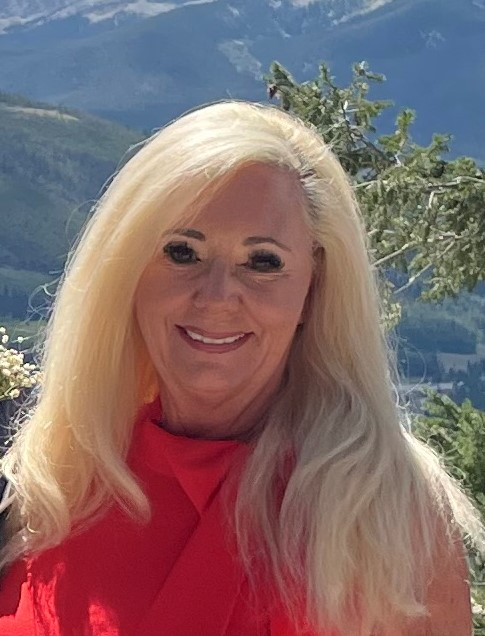
Rebecca Hardcastle Wright occupies a distinctive position in modern UAP and contact research. She is not primarily known for investigating a celebrated sighting, analysing sensor data or participating in an official UAP programme. Her principal contribution has been conceptual: she developed the term “exoconsciousness” for a framework in which human consciousness, rather than the observed object alone, becomes central to understanding reported contact with non-human intelligence.
Wright dates the formal establishment of the term to 2006. She defines exoconsciousness as an innate human capacity to connect, communicate and co-create with extraterrestrial, multidimensional and spiritual intelligence. Over the following two decades, she expanded the idea through books, essays, coaching, conferences and the Institute for Exoconsciousness. Her model places contact experiencers at the centre of inquiry and proposes that consciousness may function not merely as the psychological setting in which anomalous encounters are processed, but as an interface through which some encounters occur (Institute for Exoconsciousness, n.d.-a).
This emphasis distinguishes Wright from investigators whose work begins with radar tracks, photographs, flight characteristics or physical traces. She begins with the person reporting contact. Her work asks what happens to perception, identity, relationships, spirituality and personal agency after an anomalous encounter, and whether altered states, intuition, telepathy or other anomalous cognitive experiences might be relevant to the event itself.
Those questions closely intersect with the wider consciousness dimension of UAP research. Wright’s importance does not depend on every proposition within exoconsciousness being established as fact. Her demonstrable contribution is that she supplied a name, philosophical structure and eventually an institution for an experiencer-centred interpretation of the UAP question, then extended that framework into debates about human sovereignty, artificial intelligence, space ethics and possible relationships with NHI.
Theology, education and university ministry
Public documentation of Wright’s early life is limited, and the most detailed descriptions of her undergraduate studies come from Wright’s own biographies. Otterbein University’s Class of 1973 alumni and reunion materials identify Rebecca Fisher Hardcastle Wright as a member of that class. Wright has described her undergraduate studies as concentrating on philosophy and religion and has said that she also studied Continental philosophy during a period in Basel, Switzerland (Otterbein University, 2023; Institute for Exoconsciousness, n.d.-a).
Boston University School of Theology independently identifies Wright as a member of its class of 1976. Her professional biographies describe the degree she completed there as a Master of Divinity with an emphasis on philosophical theology. She subsequently entered the United Methodist ministry and has described herself as an ordained minister who spent approximately fifteen years in ecumenical university chaplaincy at Wright State University in Ohio (Boston University School of Theology, 2021; AuthorHouse, 2008).
This background is important to understanding the later form of her UAP work. Wright did not approach anomalous experience principally as an aerospace problem. Her theological and pastoral career placed questions of meaning, personal transformation, agency and interpretation at the centre of her professional life. Those concerns later became foundational to her approach to people reporting anomalous encounters.
Wright also identifies herself as holding a doctorate in parapsychic science from the American Institute of Holistic Theology. Historical advertisements from that institution show that it offered distance-learning doctoral programmes in parapsychic science and cited accreditation through the American Association of Drugless Practitioners Certification & Accreditation Board. AADP itself states that its accreditation does not constitute governmental accreditation or state licensure approval. Wright’s doctoral credential is therefore most accurately presented with the awarding institution and accreditation context specified, rather than implied to be equivalent to a doctorate from a conventionally accredited research university (American Institute of Holistic Theology, 2006; American Association of Drugless Practitioners, n.d.).
Her professional biographies further describe training and work in hypnotherapy, mind-body practice and coaching. Over time, these therapeutic and pastoral interests became integrated into her developing concept of exoconsciousness. The central concern was increasingly not simply whether an anomalous encounter had occurred, but how the person experiencing it could understand and integrate the event while retaining critical judgement, personal boundaries and autonomy.
Personal contact claims and the experiencer perspective
Wright publicly identifies as a lifelong contact experiencer. In a 2009 Washington Post report from the fifth X-Conference in Gaithersburg, Maryland, she said that contact with what she interpreted as extraterrestrial intelligence had occurred since she was three years old. Her present professional biography similarly places lived contact experience among the foundations of exoconsciousness (Zak, 2009; Institute for Exoconsciousness, n.d.-a).
This is significant because Wright did not approach contact solely as an outside researcher studying other people’s testimony. Her own experiences contributed to the interpretive framework she later developed.
Two evidentiary layers should nevertheless remain separate. The first is documented testimony: Wright has repeatedly reported anomalous experiences that she understands as contact. The second is the interpretation of those experiences as communication with autonomous extraterrestrial, multidimensional or spiritual intelligence. The existence of her testimony and its importance to her intellectual development are well documented. The identity and nature of the proposed communicating intelligence remain unresolved.
That distinction does not make the experiences irrelevant. Contact narratives can have psychological, cultural, phenomenological and spiritual consequences regardless of whether researchers can establish an external mechanism. One of Wright’s recurring contributions has been to resist a false choice in which experiencers must either have every interpretation accepted literally or have the experience automatically dismissed as pathology.
Scottsdale Community College and the emergence of exoconsciousness
An important public step came in 2005, when Scottsdale Community College offered Wright’s course “Extraterrestrial Reality” through its Continuing Education programme. Contemporary reporting by Phoenix New Times specifically identified it as part of the college’s Continuing Education programme rather than as a conventional credit-bearing academic course (Pela, 2005).
The course explored questions surrounding extraterrestrial life, anomalous experiences and possible interpretations of contact. Wright has subsequently described it as integrating UAP history, contact testimony and material she regarded as scientifically relevant. Whatever its formal academic status, the course demonstrates that she was publicly developing the ideas that later became exoconsciousness before the appearance of her first book.
Wright dates her formal coinage of “exoconsciousness” to 2006. The concept gradually came to encompass considerably more than witnessing a UAP. It included the possibility of intuitive or telepathic communication, psychic functioning, altered states, spiritual transformation, creativity, changes in identity and conscious interaction with forms of intelligence perceived as non-human (Institute for Exoconsciousness, n.d.-b).
Wright did not originate the wider proposition that consciousness might be connected with anomalous contact. Parapsychology, contact traditions, remote-viewing research, John E. Mack’s work with experiencers and Edgar Mitchell’s interest in noetic science all preceded her formulation. Her distinctive contribution was to collect several such strands beneath a single term and make the development of the experiencer, rather than only investigation of the anomalous object, the framework’s organising centre.
Her first book, Exoconsciousness: Your 21st Century Mind, was published by AuthorHouse on 27 December 2008. The book presented exoconsciousness as an expansion of human identity beyond an exclusively Earth-centred model and combined personal development, consciousness speculation and discussion of contact phenomena for a general readership (Hardcastle, 2008b; AuthorHouse, 2008).
“Exoconsciousness and Psychopathology”
Wright’s clearest engagement with an established philosophical forum occurred during the American Philosophical Association’s 2007 Eastern Division meeting in Baltimore. On 29 December 2007 she presented “Exoconsciousness and Psychopathology” in a session of the Karl Jaspers Society of North America concerning philosophy, psychology and psychopathology.
The surviving contemporary programmes contain a small affiliation discrepancy. The Karl Jaspers Society programme listed Rebecca Hardcastle as being in “Private Practice”, while the APA master programme identified her as an “Independent Scholar”. Both records refer to the same presentation and should be retained rather than forcing one description to supersede the other (Karl Jaspers Society of North America, 2007; American Philosophical Association, 2007).
The paper appeared the following year in Existenz: An International Journal in Philosophy, Religion, Politics, and the Arts. It addressed a genuine methodological and ethical problem: does reporting an extraordinary experience itself justify a psychiatric interpretation? Wright argued that it does not. Drawing on Karl Jaspers’ concern with phenomenology, cultural context and the limits of knowledge, she proposed that reports interpreted as extraterrestrial contact should not automatically be classified as pathological. She also drew on John E. Mack’s clinical work with people reporting abduction and contact experiences (Hardcastle, 2008a).
The paper’s strongest contribution is this separation of unusual testimony from automatic diagnosis. A psychologically healthy person can sincerely report an anomalous experience even when researchers remain uncertain about what caused it. That proposition does not require acceptance of an extraterrestrial interpretation.
The evidential reach of the essay was more limited. It was a philosophical and interpretive paper rather than a controlled clinical experiment. It did not introduce a blinded participant study, a comparison population, physiological measurements or independently replicated information-transfer experiments. Wright considered alternatives including sleep paralysis, trauma, false memory and temporal-lobe explanations, arguing that they were insufficient to explain the full phenomenology she was addressing. Demonstrating weaknesses in one explanation, however, does not by itself establish another.
The essay also invoked quantum ideas and nonlocal models of consciousness when considering telepathy and multidimensional contact. These remain among the more speculative elements of the framework. Quantum mechanics demonstrates non-classical behaviour in physical systems, but concepts such as entanglement and nonlocality do not by themselves demonstrate telepathic transfer or communication between human consciousness and NHI. Wright’s paper offered a conceptual bridge, not a demonstrated physical mechanism.
The X-Conference and a developmental model of contact
By 2009 Wright had become more visible within American contact and disclosure communities. The Washington Post covered her participation at the fifth X-Conference, describing her as a Phoenix-based hypnotherapist and exoconsciousness coach. The report recorded her argument that humanity would need a significant change of frame if it were to understand itself as part of a wider community of intelligence (Zak, 2009).
Her later writing increasingly presented exoconsciousness not as a single extraordinary event but as a developmental process. A person might begin with an encounter, anomalous perception or period of disruption and gradually attempt to integrate it into a stable identity and worldview.
Central to Wright’s model is the idea of sovereignty. She argues that experiencers should retain boundaries, discernment and freedom of choice rather than assuming that a perceived non-human intelligence is necessarily wiser, benevolent or entitled to obedience. Her preferred ideal is a peer relationship in which the human participant retains moral agency and the ability to accept, reject or question perceived communication.
This aspect of her work can be considered independently of the unresolved origin of contact experiences. Whether an experience is ultimately shown to be externally generated, psychologically mediated or produced through mechanisms not yet well understood, retaining personal agency and critical judgement remains a defensible principle.
At the same time, a methodological tension remains. A framework that encourages people to take internally perceived communication seriously may also increase confidence that ambiguous thoughts, impressions or altered-state experiences originate from an autonomous external intelligence. Ethical discernment can reduce some risks, but it cannot determine the source of information. That requires independent corroboration and methods designed to separate intuition, imagination, memory, suggestion and externally acquired information.
Edgar Mitchell and Quantrek
Wright’s association with Apollo 14 astronaut Edgar Mitchell became another significant element of her career. Mitchell’s post-NASA interests included consciousness research, noetic science, unconventional energy concepts and public discussion of extraterrestrial life. Wright has written retrospectively that she became involved with his Quantrek organisation and later represented the project in Washington, DC.
The archival record independently confirms her Quantrek role by 2014. A DKIM-verified archived email sent from Wright’s Gmail account and signed by Edgar Mitchell identified “Rebecca Hardcastle Wright” as Quantrek’s Washington, DC representative. The 14 January 2014 message sought a discussion with John Podesta concerning disclosure, consciousness and zero-point-energy research (WikiLeaks Podesta Email Archive, 2014a).
The distinction concerning the email’s provenance is important. DKIM verification supports the integrity and domain provenance of the archived message. It does not independently demonstrate who composed every sentence or personally authorised each statement attributed to Mitchell. What the record firmly establishes is that the message came through Wright’s Gmail account, carried Mitchell’s signature, and identified Wright as Quantrek’s Washington representative.
Further correspondence from July 2014 documents efforts to arrange a meeting involving Mitchell and Podesta. Podesta aide Eryn Sepp indicated that Podesta might first meet without involving President Barack Obama, while Wright proposed attending in person with Mitchell participating remotely. The surviving correspondence shows scheduling discussions and political outreach. It does not establish that the proposed Mitchell-Podesta meeting ultimately occurred (WikiLeaks Podesta Email Archive, 2014b).
The Barack Obama Presidential Library separately holds a collection of 33 assets responsive to a Freedom of Information Act request concerning Wright, particularly correspondence involving Podesta or White House personnel. Its finding aid describes email correspondence, meeting-related materials, gift receipt files and an Exoconscious blog message. These records establish political outreach and correspondence. They do not establish official endorsement of the NHI, energy or disclosure claims discussed within that network (Barack Obama Presidential Library, n.d.).
The Quantrek period is significant because it brought together three strands of Wright’s developing work: consciousness, UAP disclosure advocacy and questions about future energy and space policy. It also contributed to the expansion of exoconsciousness from a model of personal integration towards a broader civilisational philosophy.
Building the Institute for Exoconsciousness
The history of the Institute for Exoconsciousness involves several dates referring to different stages of organisational development.
By 29 July 2014, Wright was already signing correspondence as “Founder, Institute of Exoconsciousness”. This establishes that the institutional name and founder identity were in use by that date (WikiLeaks Podesta Email Archive, 2014b).
The institute’s own organisational history states that Wright founded I-EXO in Washington, DC, in 2016, when she brought together an international group of experiencers to develop its mission and programmes. A January 2019 annual report covering the organisation’s 2018 activities stated that state and federal non-profit status had been obtained during May and June 2018. Present I-EXO foundational material also uses 2018 as a founding date (Institute for Exoconsciousness, n.d.-c; Hardcastle, 2019).
The chronology is therefore most accurately represented as a sequence rather than reduced to one date. The Institute identity was already being used in 2014, Wright’s account places organised community development in 2016, and formal non-profit institutionalisation followed in 2018.
I-EXO today describes itself as an educational non-profit concerned with human consciousness and relationships with extraterrestrial, multidimensional and spiritual intelligence. Its activities include educational programming, coaching, discussion groups, media and community-building for people who interpret their experiences through a contact framework.
The organisation describes itself as a “post-disclosure” organisation supporting co-creation between humans and off-planet intelligence. That is I-EXO’s self-description, not an independently established historical category. The phrase nevertheless reveals an important aspect of the institute’s position. Rather than treating the existence of NHI contact as a proposition that must first be established, I-EXO generally treats contact as the contextual starting point for questions about development, ethics, collaboration and governance.
Three books and the expansion of the framework
Wright’s three principal books show how exoconsciousness expanded from a psychology and spirituality of contact into a wider philosophy of civilisation.
Exoconsciousness: Your 21st Century Mind, published in 2008, concentrated principally on consciousness, personal transformation and an expanded model of human identity (Hardcastle, 2008b).
How Exoconscious Humans Guide Our Space-Faring Future was publicly announced as released in October 2018 through Exoconscious Press, although Wright’s current website lists the book as a 2019 publication. The contemporaneous 2018 release material provides the firmer publication marker, while the current 2019 listing should be recognised as a bibliographic inconsistency rather than silently reconciled. The book broadened Wright’s framework to include space exploration, technology, consciousness, religion, governance and a proposed future role for contact experiencers.
Exoconscious Humans: Will Free Will Survive in an Increasingly Non-Human World? followed in 2021 through Waterside Productions. Boston University independently records the publication and identifies Wright as a School of Theology alumna from the class of 1976. The book placed artificial intelligence, transhumanism and human agency at the centre of Wright’s developing philosophy, contrasting what she calls natural psychic intelligence with increasingly engineered forms of intelligence and biology (Boston University School of Theology, 2021).
Across the three books a clear trajectory emerges. The first establishes an exoconscious identity. The second assigns experiencers a proposed role in humanity’s future beyond Earth. The third treats human consciousness and free will as domains requiring protection as increasingly powerful artificial and potentially non-human forms of intelligence enter the discussion.
The breadth of the framework is one of its strengths and one of its methodological difficulties. Exoconsciousness can accommodate contact testimony, psi, spirituality, altered states, artificial intelligence, space governance, bioelectricity and emerging speculation about plasma. This permits comparison across fields that are often discussed separately. It also creates a high evidential burden because a framework capable of incorporating many different phenomena needs clear criteria for determining when an apparent relationship is genuine and when the proposed connection has failed.
Human sovereignty and the Exoconscious Planetary Constitution
The concept of human sovereignty has become increasingly prominent in Wright’s later work. She uses it to describe the preservation of agency over consciousness, identity, perception and decision-making in the presence of artificial intelligence, technological intervention and perceived NHI contact. It represents an extension of her earlier emphasis on experiencer boundaries into questions of ethics and governance.
On 20 September 2024, four I-EXO figures signed what the organisation calls the Exoconscious Planetary Constitution: Rebecca Hardcastle Wright, Nancy du Tertre, Linda Martuch and Susan Manewich. Current I-EXO materials identify Wright and du Tertre as the document’s co-creators. The declaration argues for inclusion of contact experiencers in discussions concerning NHI, advocates peaceful interspecies relations and presents consciousness and human agency as domains requiring explicit protection (Institute for Exoconsciousness, 2024).
I-EXO describes the constitution as the first governance document specifically addressing human rights and responsibilities in direct relationships with NHI in space. The existence, date and signatories of the document are documented. Its claimed historical priority is an organisational assertion and has not been established through a comprehensive comparative study of earlier extraterrestrial-contact declarations, proposed space-law frameworks and first-contact protocols.
The constitution nevertheless illustrates how far Wright’s thought has travelled. A concept initially developed around the inner experience of contact had, by the mid-2020s, become a framework for proposed rights, responsibilities and governance in relationships involving NHI.
Plasma, consciousness and a new research frontier
In February 2026, I-EXO launched a six-month Plasma Science Study Group running through July. The programme combined established topics such as space plasma, solar activity and bioelectricity with more speculative subjects involving orbs, consciousness, archetypal intelligence and contact phenomena. I-EXO described it as a collaborative study series rather than a conventional accredited science course (Institute for Exoconsciousness, 2026).
The programme reflects Wright’s continuing effort to explore possible bridges between physical phenomena and consciousness. Plasma is a well-established state of matter central to astrophysics, space weather and numerous terrestrial processes. Claims that plasma might mediate intelligence, consciousness or anomalous contact require separate empirical demonstration.
The distinction is important. Bringing two areas of inquiry together may generate useful hypotheses, but curricular proximity is not evidence of causal connection. If plasma is eventually shown to play a role in some forms of anomalous experience, that relationship will need to be established through repeatable observation, measurement and independent analysis.
Evidence and methodological limits
Wright’s documented record is substantial enough to distinguish her historical importance from the more ambitious claims associated with exoconsciousness. She developed and popularised the term, taught a documented Continuing Education course on extraterrestrial themes in 2005, presented at a Karl Jaspers Society session held during an APA meeting, published a philosophical paper and three books, represented Edgar Mitchell’s Quantrek initiative in Washington correspondence, participated in documented political outreach, and developed the Institute for Exoconsciousness into a formal non-profit organisation.
Those facts establish her role in the history of consciousness-centred UAP thought. They do not automatically establish the external source of her personal experiences or the physical mechanisms proposed within her framework.
Several different layers of claim recur throughout her work. The first is phenomenological: people report telepathy, perceived entities, altered states and lasting changes in identity after encounters they interpret as contact. The second is clinical and ethical: such testimony should not automatically be considered evidence of psychological disorder. The third is ontological: at least some of these experiences involve autonomous NHI. The fourth is mechanistic: nonlocal consciousness, psi or related processes permit information exchange.
Evidence relevant to one layer cannot simply be transferred to the next. A person may be psychologically healthy and sincere while the origin of an experience remains uncertain. Likewise, similarities among experiencer reports may justify studying a pattern without uniquely identifying its cause.
The same caution applies to quantum concepts. Terms such as entanglement, observer effects and nonlocality have precise meanings within physics. Their existence does not by itself establish macroscopic telepathy or communication across dimensions. If exoconsciousness is to develop as an empirical research programme, its strongest propositions would require operational definitions, prospective data collection, controls against sensory leakage and suggestion, independently assessed information-transfer experiments, replication and explicit criteria under which a hypothesis could be judged unsupported.
The role of testimony also requires careful handling. Testimony is indispensable when studying perception, memory, meaning, trauma and transformative experience. Problems arise when one account is simultaneously used as evidence that an experience occurred, that it had an external source and that the source possessed a particular identity or intention. Those are separate propositions requiring different forms of evidence.
None of these limitations erases Wright’s contribution. Rather, they define the boundary between what her work has already accomplished conceptually and what would still have to be demonstrated experimentally.
Influence and legacy
Wright’s clearest influence lies within experiencer, contact and consciousness-oriented UAP communities. She supplied a durable term, developed it across roughly two decades, created an organisation around it and connected the experiencer question to wider debates about identity, artificial intelligence, space exploration and governance.
The available academic record does not indicate that exoconsciousness has become a recognised empirical discipline within mainstream neuroscience, psychology or physics. Its formal academic connections include Wright’s Boston University theological education, her 2007 Karl Jaspers Society presentation and her 2008 Existenz publication, but most of the framework’s subsequent development has occurred through independent books, conferences, online education, coaching, experiencer communities and I-EXO programmes. It is therefore more accurately described as an interdisciplinary intellectual and experiential framework than as a recognised scientific speciality.
Its place in the intellectual history of the UAP subject is nevertheless significant. Wright helped articulate a transition from asking only what an anomalous object might be to asking what happens to the human being who encounters it. That second question has acquired greater importance as researchers examine ontological shock, anomalous cognition, telepathic reports, transformative after-effects and the possibility that some UAP encounters cannot be adequately described simply as observations of distant machines.
Her most durable contribution may therefore be the insistence that the experiencer is a legitimate subject of inquiry rather than merely an unreliable appendage to the event. She has argued consistently that consciousness, agency and meaning should be examined alongside physical observations.
Her more ambitious propositions remain unresolved. Whether human consciousness can obtain verifiable information from autonomous NHI, whether psi capacities participate in UAP encounters, and whether experiencers possess knowledge unavailable through conventional observation are questions that require stronger experimental tests.
Rebecca Hardcastle Wright’s place in UAP history is consequently that of a conceptual organiser, experiencer advocate and institution builder who developed a language for the consciousness-centred dimension of contact. The future significance of exoconsciousness will depend on whether its experiential richness can be joined to methods capable of distinguishing interpretation from independently demonstrable anomaly and, where genuine anomalous information exists, showing it under conditions that other researchers can test.
Selected works
Hardcastle, R. (2008a). Exoconsciousness and psychopathology. Existenz: An International Journal in Philosophy, Religion, Politics, and the Arts, 3(2), 30–37.
Hardcastle, R. (2008b). Exoconsciousness: Your 21st century mind. AuthorHouse.
Hardcastle Wright, R. (2018). How exoconscious humans guide our space-faring future. Exoconscious Press. Contemporary release material dates publication to October 2018; Wright’s current website lists 2019.
Hardcastle Wright, R. (2021). Exoconscious humans: Will free will survive in an increasingly non-human world? Waterside Productions.
References
American Association of Drugless Practitioners. (n.d.). Certification & accreditation board. https://aadp.net/about-aadp/certification-accreditation-board/
American Institute of Holistic Theology. (2006). [Advertisement for distance-learning degree programmes, including parapsychic science]. Spirituality & Health, February 2006. https://storage.googleapis.com/spirituality-health/files/Issues/2006-Feb-xchkd.pdf
American Philosophical Association. (2007). Programme of the 104th Annual Meeting, Eastern Division. https://cdn.ymaws.com/www.apaonline.org/resource/resmgr/Old_Meeting_Programs/EasternProgram2007.pdf
AuthorHouse. (2008). Exoconsciousness: Your 21st century mind. https://www.authorhouse.com/en-GB/bookstore/bookdetails/273848-exoconsciousness
Barack Obama Presidential Library. (n.d.). Records related to Rebecca Hardcastle Wright, FOIA 22-21416-F. https://www.obamalibrary.gov/digital-research-room/finding-aids/records-related-rebecca-hardcastle-wright-22-21416-f
Boston University School of Theology. (2021, May 30). Rebecca Hardcastle Wright, Ph.D. (STH’76) published “Exoconscious Humans: Will Free Will Survive in an Increasingly Non-Human World?” https://www.bu.edu/sth/rebecca-hardcastle-wright-ph-d-sth76-published-exoconscious-humans-will-free-will-survive-in-an-increasingly-non-human-world/
Hardcastle, R. (2008a). Exoconsciousness and psychopathology. Existenz: An International Journal in Philosophy, Religion, Politics, and the Arts, 3(2), 30–37. https://www.existenz.us/volumes/Vol.3-2Hardcastle.pdf
Hardcastle, R. (2008b). Exoconsciousness: Your 21st century mind. AuthorHouse.
Hardcastle, R. (2019, January 17). Newsletter & Annual Report: January 2019. Institute for Exoconsciousness/ExoNews. https://exonews.org/newsletter-institute-for-exoconsciousness/
Institute for Exoconsciousness. (2024). Exoconscious Planetary Constitution. https://exoconscioushumans.com/resources
Institute for Exoconsciousness. (2026). Plasma Science Study Group and courses and events. https://exoconsciousness.com/courses-and-events
Institute for Exoconsciousness. (n.d.-a). About Rebecca Hardcastle Wright. https://exoconsciousness.com/about-rebecca
Institute for Exoconsciousness. (n.d.-b). What is exoconsciousness? https://exoconsciousness.com/what-is-exoconsciousness%3F
Institute for Exoconsciousness. (n.d.-c). I-EXO: Institute for Exoconsciousness. https://exoconsciousness.com/i-exo
Karl Jaspers Society of North America. (2007). APA Eastern Division meeting, December 2007. Boston University. https://www.bu.edu/paideia/kjsna/confer0708.html
Otterbein University. (2023). Class of 1973 Golden Reunion memory book. https://www.otterbein.edu/alumni/wp-content/uploads/sites/4/2023/09/class-of-1973-golden-reunion.pdf
Pela, R. L. (2005, January 13). Space crash course. Phoenix New Times. https://www.phoenixnewtimes.com/arts-culture/space-crash-course-6426872/
WikiLeaks Podesta Email Archive. (2014a, January 14). Dr Edgar Mitchell Request for Appointment [Email from Rebecca Hardcastle Wright’s account, signed Edgar D. Mitchell]. https://wikileaks.org/podesta-emails/emailid/41591
WikiLeaks Podesta Email Archive. (2014b, July 29). Re: Apollo Astronaut, Dr. Edgar Mitchell’s, request for meeting to discuss disclosure [Archived email correspondence]. https://wikileaks.org/podesta-emails/emailid/15052
Zak, D. (2009, April 21). The Exo Files. The Washington Post. https://www.washingtonpost.com/archive/style/2009/04/21/the-exo-files/e62cb375-4823-4dda-8b6a-cb81973e66d5/
SEO keywords
Rebecca Hardcastle Wright, Rebecca Hardcastle, Institute for Exoconsciousness, I-EXO, exoconsciousness, UAP consciousness, NHI contact, contact experiencers, Edgar Mitchell, Quantrek, John E. Mack, experiencer research, human sovereignty, Exoconscious Planetary Constitution, psychic intelligence, telepathic contact, UAP contact, consciousness and NHI, extraterrestrial contact, multidimensional contact, UAP experiencer integration