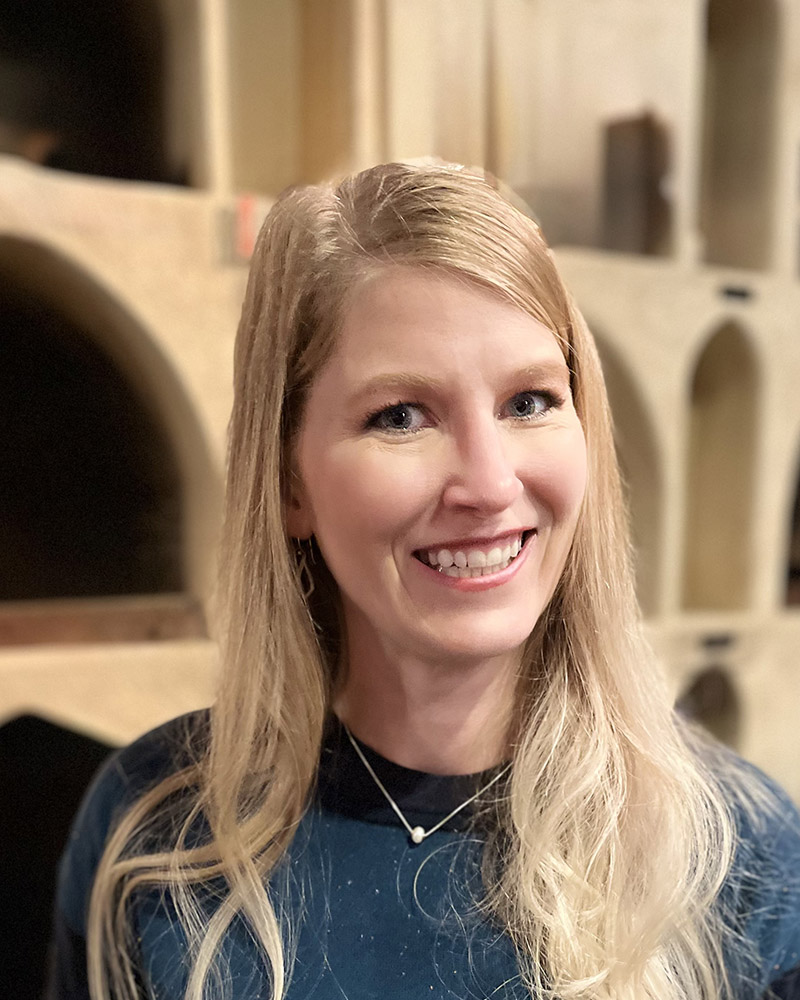
Sarah Gamm occupies an unusual position in the modern history of unidentified anomalous phenomena. She is a scientist whose professional biographies describe her as a former National Geospatial-Intelligence Agency image scientist and imagery analyst. That specific job description remains biography-based, but her NGA affiliation and work in synthetic aperture radar are independently documented by SPIE. Gamm later worked in counterproliferation and says that, while at NGA, she supported UAP-related analytical work during 2019 and 2020 that she associates with the effort later formally constituted as the Department of Defense UAP Task Force.
That chronology matters. The formally named UAPTF did not exist throughout 2019. The Department of Defense says Deputy Secretary David Norquist approved its establishment on 4 August 2020, followed by the public announcement on 14 August. Gamm nevertheless recalls “supporting the task force from NGA” during 2019 and 2020. The most defensible account is therefore that she participated in UAP-related analytical activity that she associates with the later task-force effort, without treating every part of the 2019 work as belonging to the formally constituted UAPTF.
Since entering public UAP discussion in 2024, Gamm has gone considerably further. She says some classified imagery and data convinced her that certain observations could not be reconciled with known human technology. She has also spoken about a 2012 near-death experience, psychic perception and encounters she interprets as involving non-human or non-physical intelligences. These elements do not possess the same evidentiary status. Her education, NGA affiliation and remote-sensing work have independent documentary anchors. Her conclusions concerning classified imagery remain testimony because the underlying data are not publicly available. Her anomalous experiences remain first-person reports whose ultimate explanation is unresolved.
That separation is essential to understanding both her significance and the limits of the record.
Rural Missouri, physics and strategic studies
Gamm has described growing up on a farm in rural Missouri, where dark skies encouraged a fascination with astronomy from an early age. In later interviews she recalled being interested not only in the stars but also in science fiction, unusual phenomena and religious questions. She has cited The X-Files as a formative cultural influence and has described herself as relating to both the scientifically sceptical and more open-ended approaches represented by its principal characters. These are autobiographical recollections rather than independently reconstructed childhood history.
Her formal university record can now be stated with greater precision than many public biographies provide. Missouri State University’s Department of Physics, Astronomy and Materials Science identifies Gamm as a 2006 Bachelor of Science in Physics graduate. Public speaker and podcast biographies have often described her undergraduate background more loosely as Physics/Astrophysics or Astrophysics, but the university record is the stronger source for the formal degree title.
In 2019, Missouri State University awarded Gamm a Master of Science in Defense and Strategic Studies. The university’s Defence and Strategic Studies master’s programme includes a Weapons of Mass Destruction option, while a separate Countering Weapons of Mass Destruction graduate certificate is also offered. The distinction explains why some public biographies have compressed her graduate education into descriptions such as “Countering Weapons of Mass Destruction”, but that is not the formal title recorded for her master’s degree.
Her professional biographies also report that she completed WMD-related studies at the National Defense University. No public NDU alumni record located for this biography independently verifies the precise qualification, so it is best retained as attributed career information rather than stated as an independently established credential.
The combination of physics, remote sensing and strategic studies is relevant to her later UAP work. Physics and geospatial analysis involve extracting conclusions from indirect measurements while understanding the limits of the instruments involved. Counterproliferation analysis presents another difficulty: information may be incomplete, compartmented, misleading or deliberately concealed. Both disciplines reward the ability to distinguish what the evidence establishes from what remains uncertain.
Satellite systems and geospatial intelligence
Professional biographies place Gamm’s early career in space-based intelligence and satellite systems, including work in the defence-aerospace sector. The precise chronology of those early positions is less securely reconstructed from independent institutional sources than her subsequent NGA affiliation, so those details are appropriately treated as professional biography.
The strongest public anchor for her technical background appears in the 2019 SPIE Remote Sensing programme. It lists “Sarah Gamm, National Geospatial-Intelligence Agency (United States)” as a contributor to “Karst Investigation Program Guided by Synthetic Aperture Radar”, alongside William Empson, David Cohen, Baron Worsham and Sean Yarborough. The paper was subsequently cited in later remote-sensing literature concerned with dam monitoring.
Synthetic aperture radar, usually abbreviated SAR, differs fundamentally from ordinary photography. A radar instrument transmits electromagnetic energy and measures the returned signal. Through processing of repeated measurements from a moving platform, SAR can create detailed representations of terrain or structures, including under conditions where darkness or cloud cover restricts optical imaging.
The technology is powerful but interpretively demanding. Resolution, collection geometry, platform motion, shadowing, speckle, processing and the physical properties of a target can all influence what appears in the resulting image. A trained analyst therefore has to ask not simply what an object resembles, but how the sensor and processing chain may have produced that appearance.
That distinction becomes important when assessing Gamm’s later UAP testimony. Her technical background does not prove that her interpretation of a particular anomalous object was correct. It does establish relevant experience in a field in which apparent form and apparent movement cannot safely be interpreted without understanding the sensor.
Counterproliferation and ODNI
After completing her master’s degree in 2019, Gamm says she undertook a joint-duty assignment within the Office of the Director of National Intelligence focused on nuclear counterproliferation.
The institutional terminology requires care. In 2019 the organisation was the National Counterproliferation Center, or NCPC. ODNI documentation records that the biosecurity mission was assigned to NCPC under the Intelligence Authorization Act for Fiscal Year 2022, followed by the centre’s renaming as the National Counterproliferation and Biosecurity Center. Describing Gamm’s 2019 assignment using the later NCBC name would therefore be historically inaccurate.
Professional biographies describe her ODNI work as involving nuclear counterproliferation strategy and policy. Later programme materials have described subsequent nuclear-analysis work associated with the Pentagon and the U.S. Air Force. These particulars remain primarily professional biography rather than a publicly released personnel history, so attribution is important.
In May 2026, The Good Trouble Show introduced Gamm as a geospatial-intelligence engineer working in the Army TENCAP environment. The programme immediately added that she was appearing in a personal capacity and that her views did not represent the U.S. Army, Department of Defense or federal government. This is evidence of how her contemporary role was publicly described, rather than an official Army personnel announcement.
Supporting UAP work from NGA
Gamm’s description of her UAP role is more restrained than some programme introductions have suggested.
In a detailed later interview, she said that during 2019 and 2020 she was “supporting the task force from NGA”. She subsequently explained that she had not been part of the “larger task force”, did not meet its senior leadership and saw the project from a “very limited scope”, which she characterised as a “small corner” of the overall undertaking. She said her work largely involved imagery, video and associated data points.
This is the basis for describing her as an NGA analyst who supported UAPTF-related work rather than as a senior task-force official.
The government record establishes the institutional setting but stops short of verifying her personal assignment. ODNI’s June 2021 preliminary assessment states that the UAPTF and ODNI drafted the report with input from numerous organisations, including NGA. The report does not identify Gamm or provide a roster of contributing analysts.
Her account also emphasises the limits of her access. When asked whether information might have been withheld from her, Gamm replied that she “wasn’t read into any programs”. She suggested that some information could have been withheld for compartmentation reasons, while other cases might have been structured as a form of blind analysis so that a researcher could evaluate imagery without being influenced by an analyst already familiar with the location. She repeated that she had not been read into other programmes.
The statement should not be expanded into evidence that she knew of particular undisclosed special-access programmes. Its importance lies in the opposite direction: she is acknowledging that her visibility was incomplete.
How she describes the analytical process
One of Gamm’s most valuable contributions to the public UAP record is her description of the method.
She has said that analysts did not simply label unusual imagery anomalous. According to her account, they examined whether an observation could be reproduced, whether aircraft or mechanical components might explain it, what eyewitnesses reported, and what environmental information showed. She recalls using multiple weather sources rather than relying on a single feed and consulting other specialists when the interpretation of a particular signal lay beyond her own expertise.
That description broadly matches the methodological difficulties acknowledged by ODNI. The 2021 assessment warned that military sensors are generally designed for specific operational missions rather than UAP identification. It stressed that viewing geometry and the number of sensors observing an object can strongly affect interpretation, and it noted that some apparently unusual performance could result from sensor error, spoofing or observer misperception.
The assessment covered 144 U.S. government reports. Eighty involved observations by multiple sensors. At that stage, one object had been identified with high confidence as a large deflating balloon, while the others remained unresolved in the available dataset. The same document made clear that unresolved status did not establish a single extraordinary explanation.
Gamm has described the classification process in similarly provisional terms. She recalls an object that had initially remained unidentified but was later attributed to a weather balloon, after which the relevant database was updated. For her, “unidentified” was therefore a temporary analytical status rather than a synonym for extraterrestrial or non-human.
Yet she also reached a more consequential conclusion. Gamm says some classified material persuaded her that certain observations could not be explained by known human technology. In her 2024 public appearances she connected that conclusion with her belief that humanity is not alone.
The evidentiary boundary is straightforward. Her training makes the testimony relevant. It does not make the underlying evidence publicly testable. The imagery, metadata and associated analytical products necessary to evaluate her conclusion independently have not been released.
Going public in 2024
Gamm’s public UAP profile expanded rapidly in the autumn of 2024.
On 2 October she appeared on The Good Trouble Show in an episode presenting her intelligence and UAP background. On 16 October she appeared on Reality Check with Ross Coulthart. On 24 October she was interviewed by That UFO Podcast, and on 29 October Disclosure Team released a longer interview with her.
These appearances established the two strands that continue to define her public identity. One was the intelligence analyst discussing imagery, classification and the limits of UAP data. The other was the experiencer discussing psychic perception, spirituality and forms of intelligence she believes may exist outside conventional human categories.
Gamm has generally not presented herself as releasing classified files. Instead, she describes what she says she concluded from protected information while avoiding details she believes she is not authorised to disclose. This creates an unavoidable problem for public evaluation: the classification barrier that may prevent an analyst from showing evidence also prevents outsiders from testing the analyst’s interpretation.
Credentials can increase the relevance of testimony, particularly where they show expertise in the type of evidence being discussed. They cannot substitute for the evidence itself.
The Jellyfish disagreement
The military infrared footage popularly known as the “Jellyfish” illustrates this problem particularly clearly.
In her Disclosure Team interview, Gamm stated that the circulated video was “not a UAP”. The publicly indexed timestamp places the remark at approximately 54:55. She indicated that the brief material circulating publicly did not contain the whole analytical picture.
George Knapp and Jeremy Corbell, who had publicised the footage, later revisited the case on WEAPONIZED. Their Episode 77 page explicitly characterises the issue as a dispute over AARO’s treatment of the “Jellyfish” footage. The available episode webpage does not, however, provide a transcript adequate to establish every detailed chronology claim that has subsequently circulated about when particular UAPTF personnel first possessed the video. This biography therefore does not adopt those chronology claims as fact.
The underlying disagreement remains unresolved from the public record. Gamm has not released the classified analysis she says informed her assessment, while the complete chain of custody and analytical history of the footage are also unavailable.
The episode demonstrates a structural problem in classified UAP research. When competing accounts depend upon information that the public cannot inspect, authority alone cannot settle the dispute.
Near-death experience and anomalous perception
The second major strand in Gamm’s public worldview predates her government UAP work.
Gamm reports that in 2012 she suffered cardiac arrest during routine surgery for a deviated septum. A 2026 Popular Mechanics profile states that medical personnel performed CPR and administered epinephrine and that the episode lasted less than two minutes. Gamm remembers complete darkness, deceased relatives, an overwhelming sensation of love and a presence she interpreted as God.
The distinction between the medical episode and its interpretation is important. The cardiac emergency forms part of the published biographical account. What Gamm perceived during that period, and what those perceptions mean, remains her testimony.
She says the experience profoundly changed her relationship with death and consciousness. In later interviews she has described heightened intuition, mediumistic experiences, apparitions and encounters that she interprets as involving non-human or non-physical entities. She also reports unusual experiences predating the 2012 event.
These accounts increasingly inform the way she interprets the UAP subject. Gamm has proposed that UAP, consciousness and other anomalous phenomena may be related aspects of a broader reality.
That is an interpretive framework rather than a result derived from her SAR research. Technical expertise in remote sensing cannot independently validate mediumship or entity encounters. Equally, reporting anomalous experiences does not erase her documented scientific and intelligence background.
A balanced biography must preserve both truths.
PURSUE and a return to public imagery analysis
Gamm remained active in public UAP discussion in 2026.
In May she returned to The Good Trouble Show to examine videos associated with the first PURSUE release. UAPedia’s contemporaneous Release 1 briefing counted 162 files, consisting of 120 PDFs, 28 videos and 14 images. That figure should be understood as the release-era inventory recorded by the briefing rather than an immutable count of a live portal whose displayed assets can subsequently change. UAPedia itself notes a discrepancy between the reported image count and the number of image assets visible in the portal slideshow.
During the programme, Gamm repeatedly stressed what the public videos lacked. She noted that metadata and background information had not accompanied the clips and discussed the importance of weather, location, sensor information and witness context. She considered explanations including birds, balloons, parallax, pixel saturation and other sensor-related effects rather than treating every video as evidence of advanced technology.
This is significant because it illustrates that her broader belief in non-human intelligence does not lead her to classify every ambiguous observation as extraordinary. In several instances her approach is conventionally analytical: examine the full clip, consider how the sensor behaves, test ordinary possibilities and leave an object unresolved when the available information cannot support a firmer conclusion.
At the same time, Gamm continues to maintain that publicly released imagery does not represent the strongest material she encountered during her earlier classified work. That contention remains testimonial.
Two different kinds of knowledge
Gamm’s intellectual profile is built around two modes of inquiry that she increasingly regards as compatible.
The first is technical. It asks which sensor produced an observation, what the viewing geometry was, whether apparent motion can be explained by parallax, whether weather or environmental factors matter, what other sensors observed and whether specialists from different disciplines agree.
The second is experiential. It treats intuition, near-death experience, psychic perception and alleged encounters with non-human intelligence as potentially meaningful evidence about consciousness and reality.
Gamm herself has said she tends to keep these worlds in separate “buckets” in daily life, even while acknowledging that intuition can influence the questions she asks.
For historical and analytical purposes, the separation remains necessary. Her SAR research belongs to a conventional technical record. Her conclusions about classified UAP imagery belong to technically informed testimony unless the underlying evidence becomes public. Her psychic and entity experiences belong to first-person testimony and interpretation.
UAPedia’s editorial standards provide a useful framework for precisely this kind of biography: testimony can be preserved without being treated as physical confirmation, while official records can be used as evidence of what an institution documented without becoming an automatic verdict on the phenomenon itself.
Significance and developing legacy
Sarah Gamm’s significance to contemporary UAP history is more precise than some early media descriptions implied.
She was not, by her own account, a senior UAPTF leader with comprehensive access. She describes herself as supporting UAP work from NGA, seeing only a limited portion of the larger effort and concentrating on imagery, video and associated data. She also explicitly states that she was not read into other programmes.
Her technical credentials are more firmly documented. Missouri State identifies her as a physics graduate and records her Master of Science in Defense and Strategic Studies. SPIE independently connects her with NGA and applied SAR research. These anchors matter because they establish genuine experience relevant to image and sensor interpretation without requiring acceptance of her later conclusions.
Her most useful historical contribution may therefore be procedural. Gamm provides a glimpse into how one supporting analyst says UAP work operated inside an intelligence environment: partial access, collaboration across disciplines, conventional explanations being tested, classifications changing when new information appeared and persistent frustration with data that could not be released publicly.
Her strongest conclusion remains unresolved. She believes some classified observations cannot be explained by known human technology and are consistent with non-human intelligence. The evidence necessary to confirm or reject that conclusion independently is not presently public.
Her consciousness-related experiences occupy a separate evidentiary category, yet they have become central to her understanding of the subject. This makes Gamm a particularly revealing figure in the post-2020 UAP landscape. She stands at an intersection between instrument-based intelligence analysis and the growing effort by some researchers and experiencers to connect UAP with consciousness and high-strangeness phenomena.
Neither side of that identity should be used to erase the other.
The most defensible assessment is that Sarah Gamm is a technically experienced witness to a limited portion of the modern government UAP investigative environment. Her testimony deserves documentation because of what it suggests about imagery analysis, compartmentation and the difficulties involved in working with anomalous observations inside classified systems. Her stronger claims deserve continued scrutiny precisely because the decisive evidence has not yet entered the public domain.
Future releases may change that assessment. If UAPTF-era imagery, metadata and analytical products become available, researchers may eventually compare her recollections with the underlying record. Until then, her account remains an important but bounded form of technically informed testimony.
References
Dimitropoulos, S. (2026, May 13). She died during routine surgery: Scientists think her brain simulated “heaven”, but is that the whole story? Popular Mechanics. Popular Mechanics profile
Empson, W., Cohen, D., Gamm, S., Worsham, B., & Yarborough, S. (2019). Karst investigation program guided by synthetic aperture radar. In Remote Sensing for Agriculture, Ecosystems, and Hydrology XXI. SPIE. doi:10.1117/12.2533851. SPIE Remote Sensing programme
Gamm, S. (2024, October 2). US Intelligence Analyst Sarah Gamm Goes Public on UAPs / UFOs [Podcast interview]. The Good Trouble Show. Apple Podcasts episode
Gamm, S. (2024, October 16). Interview by R. Coulthart. Former UAP Task Force insider tells Ross Coulthart: We are not alone. Reality Check with Ross Coulthart. NewsNation. NewsNation interview
Gamm, S. (2024, October 24). Sarah Gamm; UAP Task Force analyst [Podcast interview]. That UFO Podcast. Apple Podcasts episode
Gamm, S. (2024, October 29). Fmr UAP Task Force Intel Analyst – Sarah Gamm [Podcast interview]. Disclosure Team. Apple Podcasts episode
Gamm, S. (2025). Former UAP Task Force Analyst Sarah Gamm on Disclosure and Psychic Abilities [Video interview]. Unveiled. Interview and transcript
Gamm, S. (2026, May 20). Pentagon Analyst Sarah Gamm Breaks Down UAPs and Alien Encounters [Podcast interview]. The Good Trouble Show. Interview and transcript
Knapp, G., & Corbell, J. (2025, May 20). WEAPONIZED: Episode 77 [Podcast episode]. Episode 77
Missouri State University. (2018). Physics, Astronomy and Materials Science Newsletter. Department of Physics, Astronomy and Materials Science. PAMS newsletter
Missouri State University. (2019). Spring 2019 graduation list. Graduation record
Missouri State University. (n.d.). Weapons of Mass Destruction Option. School of Defense and Strategic Studies. WMD master’s option
Missouri State University. (n.d.). Countering Weapons of Mass Destruction Graduate Certificate. School of Defense and Strategic Studies. CWMD certificate programme
Office of the Director of National Intelligence. (2021, June 25). Preliminary assessment: Unidentified aerial phenomena. ODNI preliminary assessment
Office of the Director of National Intelligence. (2025). Intelligence Community Directive 655: National Intelligence Awards Program, technical amendment. ODNI directive
U.S. Department of Defense. (2020, August 14). Establishment of Unidentified Aerial Phenomena Task Force. Department of Defense release
UAPedia. (2026). How UAPedia Treats Government Sources. Government-source policy
UAPedia. (2026). PURSUE Release 1: Images and Videos Research Briefing. PURSUE research briefing
UAPedia. (2026). UAPedia Editorial Standards: Navigating the Mystery. Editorial standards
SEO keywords
Sarah Gamm biography, Sarah Gamm NGA, Sarah Gamm UAP Task Force, Sarah Gamm UAPTF, Sarah Gamm physics, Missouri State Sarah Gamm, National Geospatial-Intelligence Agency UAP, synthetic aperture radar UAP, SAR imagery analysis, Sarah Gamm PURSUE, Sarah Gamm near-death experience, UAP imagery analyst, classified UAP evidence, non-human intelligence, UAP consciousness, UAP disclosure, NGA UAP analysis, UAP Task Force history