Biography and Intellectual Profile
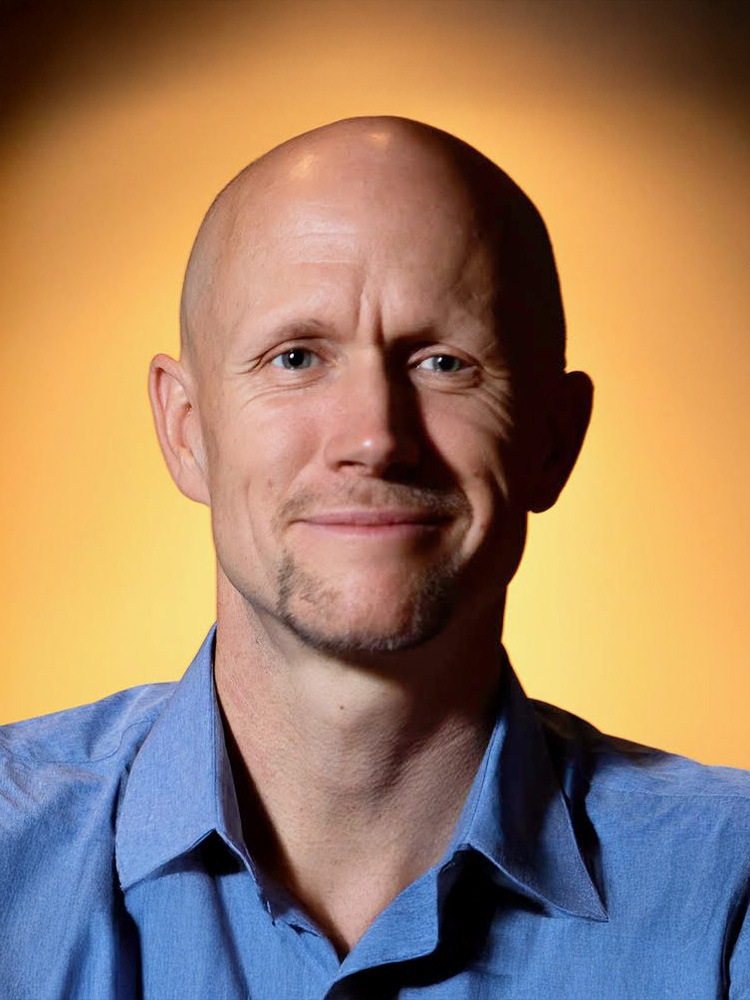
Reed Summers is a writer, podcast host, UAP researcher and organiser whose work centres on one of the most consequential questions within contemporary UAP studies: if some anomalous encounters represent interaction with non-human intelligence, what might be inferred about the activities, intentions and long-term implications of that intelligence? Rather than concentrating primarily on individual sightings, Summers has developed a broader framework joining contact testimony, intelligence assessment, human sovereignty, public disclosure, civilian detection systems and international preparedness.
His place within contemporary UAP research is unusual because his work developed from two distinct intellectual environments. The first was a family and spiritual tradition built around the claimed contact experiences and revelatory writings of his father, Marshall Vian Summers. The second, increasingly prominent in Reed Summers’s work since the mid-2020s, is a more secular language of evidence assessment, sensor infrastructure, public-interest research, international affairs and strategic risk.
The transition has not erased the assumptions of his earlier background. Instead, it has produced the central tension running through his work: Summers begins from a comparatively strong interpretation of non-human presence while simultaneously helping to construct research systems intended to produce more independent evidence about the phenomenon.
By 2026, his activities included hosting the EMERGENT podcast, serving as Director of Strategy at the Human Institute, founding the UFOevidence research platform and acting as a principal convener of the UAP Coalition. His current work consequently occupies an intersection between contact advocacy, public education, civilian UAP science and the emerging debate over how societies might respond if the presence of non-human intelligence were established. Current UAP Summit materials identify him specifically as EMERGENT host and Director of Strategy at the Human Institute. (UAP Summit)
Growing up within a contact tradition
Reliable public sources do not establish Summers’s date or place of birth, and those details are not necessary to understanding his intellectual development. What is documented is his relationship to Marshall Vian Summers, the spiritual author associated with the New Message from God and the Allies of Humanity material. The Atlantic has described the New Message as a movement based on Marshall Summers’s teachings and claimed revelations concerning alien life and other subjects.
The movement’s own literature presents an extensive cosmology concerning spirituality, environmental change, human development and intelligent life beyond Earth. Central to the Allies of Humanity material is the assertion that humanity is confronting an external intervention and must preserve its freedom, unity and sovereignty. These propositions are presented within that literature as genuine communications concerning extraterrestrial contact. They remain claims originating within the contact tradition rather than independently established findings.
Reed Summers has described his own life as shaped by a family “lineage of contact”. In an October 2025 interview, he discussed his father’s claimed initial contact, the development of what the family interpreted as telepathic communication and a prolonged effort to assess those communications. The biographical significance of these accounts is clear even where their proposed origin remains unverified: they supplied the intellectual environment from which his later interest in UAP, contact ethics and non-human intent developed. (Reed Summers)
Several ideas that later became central to his public analysis closely parallel themes in his father’s contact literature. These include caution towards technologically superior outside powers, scepticism towards assuming benevolent intent, concern about influence exercised without informed consent, and the principle that humanity should retain control over its own political and social development. Reed Summers has increasingly translated such concerns into the secular vocabulary of human security, intelligence assessment and global preparedness.
By 2012, Summers was publicly involved in promoting his father’s work. A New Knowledge Library press release distributed through Cision identified him as a media contact in connection with publication of the third Allies of Humanity volume. The provenance matters: the item was promotional material originating with the affiliated publisher and distributed through Cision rather than independent reporting.
His involvement became more visible in 2017 when he created a Kickstarter campaign supporting a Marshall Vian Summers book concerning contact and humanity’s future in space. The campaign attracted 119 backers and raised $11,340 against an $8,000 target. This provides an early documented example of Summers functioning as a communicator, campaign organiser and public advocate around contact-related material before his later emergence as a more independent UAP commentator. (Kickstarter)
A November 2023 programme description for an appearance on UFO HUB presented Summers as a writer, public speaker and “principal teacher” of the New Message from God. That characterisation came from promotional biographical material accompanying the programme rather than independent credential verification. It is nevertheless useful evidence of the way Summers was publicly presented at that stage of his career and of the continuing relationship between his UAP work and the New Message tradition.
Communication, broadcasting and public explanation
Summers states that he earned a bachelor’s degree in Communication and Rhetoric from the University of Washington in Seattle and subsequently spent 12 years working in science broadcasting at the National Center for Atmospheric Research. His current biography makes both claims. Independent institutional documentation confirming the degree and precise tenure was not identified in the sources reviewed for this biography, so they are best treated as self-reported professional history. (Reed Summers)
The background remains relevant to his later work. Communication and broadcasting correspond closely with the skills Summers displays publicly: synthesising complicated material, structuring arguments, interviewing specialists and translating technical or disputed subjects for non-specialists. The sources reviewed identify his professional background in communication, broadcasting, strategy and international studies rather than physics, astronomy or aerospace engineering. (Reed Summers)
By 2026, Summers was also identifying himself as an M.A. candidate in International Studies at the University of Denver. His UAP Coalition biography links that study with intergovernmental coordination, human security and readiness frameworks concerning possible non-human intelligence. Other current organisational records identify him as Director of Strategy at the Human Institute. (UAP Coalition)
From inherited warning to analytical framework
Summers’s authorship is primarily essayistic and digital. His body of work includes articles, lectures, interviews, analytical frameworks, course material and podcast episodes rather than a conventional bibliography of independently published monographs under his own name. His identity as an author is therefore most precisely understood in the broader sense of a writer and public analyst.
A defining essay appeared on 21 March 2024 under the title “Unraveling the Mystery of UAPs”. Summers argued that UAP research had accumulated possibilities without progressing sufficiently towards provisional conclusions. He proposed a sequence moving from possibilities to probabilities, then to assessment, a working conclusion, a position and finally proposed actions and goals. His article archive confirms the title and publication date. (Reed Summers)
The framework is intended to address a recurring difficulty within UAP discourse: how to move from an expanding catalogue of possibilities towards assessments that can generate testable questions and guide decisions. Summers also emphasises that working conclusions should remain revisable when new evidence appears. In principle, that produces an iterative method rather than one in which an initial interpretation becomes permanently fixed.
There is nevertheless an important tension between the methodology and Summers’s own starting position. His public biography describes his focus as the “activities and agenda” of an alien visitation, which goes considerably beyond treating non-human involvement merely as one possible explanation. (Reed Summers) His framework therefore combines an ostensibly open process of inference with a comparatively strong prior interpretation of what the phenomenon represents.
That distinction is important when assessing his intellectual contribution. The method itself could be used by researchers who disagree with his conclusions. Moving from possible explanations to provisional probabilities, explicitly recording assumptions and revising assessments as evidence changes are all compatible with disciplined inquiry. Whether Summers applies that openness consistently to his own contact-derived interpretation remains a separate question.
The universe as a competitive environment
Summers developed his approach to non-human intent further in “The Universe as Nature: Preparing for Encounters with Non-Human Intelligence”, published on 24 October 2024. There he argued against assuming that technological advancement necessarily produces ethical or spiritual advancement. Instead, he proposed considering whether evolutionary pressures, resource requirements, environmental constraints and strategic competition might continue to shape advanced societies. (Reed Summers)
The reasoning is partly analogical. Terrestrial history demonstrates that technological sophistication and ethical restraint do not necessarily develop together. Summers extrapolates from that observation to suggest that a technologically superior civilisation could still possess interests that conflict with human autonomy.
As a risk-assessment principle, this challenges idealised assumptions about contact. As evidence of actual non-human motives, however, the analogy remains insufficient by itself. Human evolutionary history can generate hypotheses concerning possible behaviour, but it cannot establish the intentions of an unknown intelligence. Summers’s argument is therefore strongest as a warning against automatic assumptions of benevolence and weaker when terrestrial analogy is treated as indirect confirmation of a particular external agenda.
EMERGENT and the development of a public platform
Summers announced the EMERGENT podcast on 15 October 2024. The page is currently titled “EMERGENT News October 15, 2024” and describes the forthcoming programme as an examination of UAP, contact and their implications for society and world affairs. The announcement identified the first episode as “The UFO Calling: Personal Responsibility in the Age of Contact.” (Reed Summers)
EMERGENT subsequently developed into a platform for conversations with researchers, scientists, lawyers, historians, field investigators, experiencer researchers and former military personnel. Summers’s current archive documents conversations involving figures including Richard Dolan, Daniel Sheehan, Rony Vernet, Michael Cifone, Ted Roe, Matthew Szydagis, Jeffrey Nuccetelli, James Fowler and John and Gerry Tedesco. (Reed Summers)
Summers’s interviewing style characteristically moves from individual evidence or testimony towards strategic interpretation. A reported incursion becomes a question about behaviour; recurring behaviour becomes a possible pattern; and patterns become the basis for asking what an unknown intelligence might be attempting to accomplish. This gives EMERGENT a coherent editorial identity, but it also means the programme is not simply a neutral catalogue of competing explanations.
Its contribution lies partly in connecting communities that often work separately. Technical detection researchers, disclosure advocates, contact investigators, policy thinkers and experiencer specialists appear within the same programme. This allows Summers to explore the gap between accumulating anomalous reports and building institutions capable of determining whether those reports contain repeatable patterns.
The Human Institute and a move towards institutions
A major development in Summers’s public career has been his involvement with the Human Institute. Current UAP Summit records identify him as Director of Strategy at the organisation. The institute describes itself as a research and action organisation addressing the scientific, societal and governance implications of UAP and potential non-human intelligence. Its stated methods include research, data collaboration, public education, international partnerships and the development of new platforms and initiatives. (Human Institute)
This represents an important shift in emphasis. Summers’s earlier work was predominantly interpretive, focusing on contact, motives, sovereignty and the significance of non-human intelligence. The Human Institute introduces a more operational question: what forms of data collection, collaboration and public infrastructure would be required to evaluate anomalous phenomena without depending entirely upon restricted government systems?
That question became central to the UAP Detection and Tracking Summit held on 7 and 8 February 2026. The official event record describes more than 18 hours of material, 14 in-depth sessions and 34 expert speakers. The programme covered aviation safety, submerged phenomena, detectable signatures, sensor technology, citizen reporting networks, international collaboration and scientific research. (UAP Summit)
Summers appeared in opening and closing sessions, moderated the session on unidentified submerged phenomena, participated in the panel on media, education and public engagement, moderated a scientific-collaboration panel and chaired a session on strategic insights from field detection. These records indicate that his role was principally organisational, communicative and strategic rather than that of a technical sensor specialist. (UAP Summit)
The summit’s opening session also articulated a more explicitly evidence-focused methodology than is sometimes evident in Summers’s contact-oriented commentary. It distinguished ordinary aviation, drones, misidentification and other prosaic causes from incidents that may remain genuinely anomalous, while emphasising calibration, multimodal sensing, validation and interoperable data infrastructure. (UAP Summit)
This measurement-first approach is important because it offers a means of testing assumptions that otherwise depend heavily on testimony and retrospective interpretation. If independent calibrated systems can capture repeatable anomalous signatures, questions about behaviour can become increasingly empirical. If they do not, stronger theories of coordinated activity would have to account for that lack of confirmation.
UFOevidence and the attempt to quantify case strength
Summers is identified by UFOevidence, commonly shortened to UFOe, as the project’s founder. Its current team page lists him as “Founder” and separately identifies his role as Director of Strategy at the Human Institute. (UFOevidence)
The platform publicly launched on 28 May 2026 following development, limited pre-launch review and beta testing. Its stated purpose is to provide a structured and transparent framework for examining UAP cases so that readers can evaluate the reasoning behind case assessments rather than simply accept a conclusion. (UFOevidence)
The published methodology separates witness quality from evidence quality and evaluates factors including witness credibility, supporting evidence and observed effects. It makes its weightings visible and explicitly states that the objective is clarity rather than definitive certainty. (UFOevidence)
A Case Lab is currently available in beta, allowing users to adjust weighting parameters and see how different assumptions alter witness, evidence and overall case scores. The live interface exposes adjustable weightings for instrumental data, visual records, formal reports, witness quantity, observing conditions and witness credibility. (UFOevidence)
The approach addresses a longstanding problem within UAP research. A case involving several independent witnesses and instrument records should not automatically be treated as evidentially equivalent to a single ambiguous image or unsupported retrospective account. A structured system can make such distinctions more explicit.
Its limitations remain significant. Numerical scoring can create an appearance of precision exceeding the quality of underlying source material. Decisions about how heavily to weigh a witness, sensor record or reported effect remain methodological judgements. The system’s broader research value will therefore depend on external scrutiny, error analysis, reproducibility and whether researchers outside the project find that its scoring architecture improves case comparison.
Building the UAP Coalition
The February 2026 summit also provided the groundwork for the UAP Coalition. Summers’s organisational account describes the initiative as emerging from the summit and a series of workshops involving scientists and technologists. The coalition is presented not as a new central authority but as a coordination structure through which independent groups can collaborate while retaining their own identities and control over their work. (UAP Coalition)
Its current roadmap is organised around four linked domains: Technology, Data, Research, and Funding & Partnership. The initiative seeks to address fragmented detection efforts, incompatible data formats, uncertain instrumentation standards and limited opportunities for independent researchers to combine observations. (UAP Coalition)
The coalition is best understood as a developing roadmap rather than an already functioning international detection network. Its October 2026 progress record documents continuing work on detectable signatures, data integration, public comment and a field proof-of-concept. Some initiatives remain explicitly proposed or await formal charters. (UAP Coalition)
This distinction is important when evaluating Summers’s institutional contribution. The achievement to date lies in convening participants, defining shared problems and designing potential standards rather than in demonstrating that a mature global sensor network already exists.
If interoperability can eventually be achieved, however, the implications extend beyond Summers’s own theories. A sufficiently transparent civilian network could test competing explanations of UAP activity without forcing researchers to depend exclusively upon military sensors, classified datasets or isolated anecdotes. It could also help determine whether purported patterns recur across locations and independent instruments.
Sovereignty, contact and the question of intent
The intellectual thread linking Summers’s early contact advocacy to his later institutional work is the principle of human sovereignty. He argues that humanity should not automatically interpret superior technology as evidence of superior ethics and should not assume that the absence of overt attack demonstrates benevolent intentions. From this perspective, a central ethical question is whether contact respects human agency and informed consent.
These ideas closely resemble the framework of the Allies of Humanity material, which depicts humanity’s freedom and self-determination as potentially threatened by covert outside intervention. Those writings describe influence, dependency and indirect control as possible instruments of intervention rather than treating conventional conquest as the only conceivable danger. These remain claims within Marshall Vian Summers’s contact literature and are not independently established descriptions of non-human behaviour. (Allies of Humanity)
Reed Summers has increasingly expressed related concerns in secular terminology. Instead of presenting the issue solely as a spiritual warning, he discusses human security, international coordination, intelligence analysis and preparation for possible contact scenarios. This translation from contact literature into a policy-oriented framework is one of the clearest developments in his public thinking.
His conclusions nevertheless extend considerably beyond what the available evidence independently establishes. Summers’s own biography describes his work as examining an alien visitation occurring in the world, while later interviews explore strategic activity and possible influence by non-human intelligence. (Reed Summers) The sources reviewed document Summers’s interpretation, but do not independently demonstrate those propositions to scientific standards.
This distinction does not imply that unresolved UAP must therefore have conventional explanations. It identifies the inferential gap between demonstrating that an observation remains unresolved and determining that it represents a particular non-human actor with a particular agenda. Summers’s growing emphasis on civilian detection may ultimately provide one means of narrowing that gap.
Citizen disclosure
A further theme in Summers’s recent work is what he calls “citizen disclosure”. His argument is that public understanding of UAP should not depend entirely upon governments deciding what information can be released. Individuals and civil society can instead become active participants by learning the evidence, communicating responsibly and supporting civilian systems capable of generating independent observations.
His public material also uses the expression “citizen disclosers”. By 2026, he was explicitly framing civilian participation as an alternative to exclusive reliance on military and intelligence institutions for information about the phenomenon. His discussion of what he calls the “Third Actor Scenario” places civilian detection and public knowledge within that broader disclosure argument. (Reed Summers)
The idea extends conventional disclosure activism. Instead of disclosure being imagined only as a future announcement by political authority, Summers treats it as a distributed social process involving education, research, public communication and independent data acquisition.
The strongest version of this principle is technical rather than rhetorical. Civilian disclosure would mean citizens and independent institutions possessing sufficient observational capacity to examine anomalous phenomena themselves. The UAP Coalition’s emphasis on interoperable sensing, evidence standards and data integration can be understood as an attempt to make that principle operational. (UAP Coalition)
Methodological strengths and unresolved tensions
Summers’s strongest methodological contribution may be his insistence that UAP research must eventually generate questions capable of guiding observation, policy and action. He asks what evidence would distinguish isolated sightings from recurring patterns, what infrastructure could reduce dependence on restricted datasets, and what forms of governance might be necessary if another intelligence were eventually confirmed.
His main vulnerability is that those questions are asked from within a worldview already strongly influenced by a particular contact narrative. If covert intervention is assumed in advance, ambiguous observations can become easier to interpret as supporting that expectation. Apparent evasiveness may be understood as evidence of concealment, while missing evidence could potentially be explained by supposing that an advanced intelligence is exceptionally difficult to detect.
Any model operating under such conditions benefits from explicit falsification criteria. A useful research framework must specify not only what evidence would strengthen a hypothesis but also what findings would weaken it.
A related issue concerns Summers’s willingness to discuss intuition, consciousness and forms of spiritual intelligence alongside empirical observation. Such experiences may legitimately motivate hypotheses or form part of the phenomenological record. They remain epistemically different from calibrated sensor data, authenticated documentation and independently repeatable measurement. Preserving that distinction is essential if the technical infrastructure Summers advocates is to generate conclusions capable of assessment beyond his existing interpretive community.
The projects with which he is now involved create an opportunity to test that distinction in practice. Multi-sensor observation, documented provenance, common data standards, transparent methodologies and external analysis could potentially challenge both reductive conventional explanations and strong contact interpretations. The critical question is whether those systems are allowed to revise the assumptions that helped inspire their creation.
Legacy in progress
Reed Summers’s historical legacy remains unfinished. The sources reviewed for this biography do not establish the origin of UAP, independently authenticate the contact communications that influenced his early worldview or demonstrate the intentions of a non-human intelligence. They do document a sustained effort to develop an interpretive framework around those questions and, increasingly, to build institutions capable of collecting stronger evidence.
His present significance lies principally in communication, intellectual framing and institution-building. He has argued that UAP should be considered not simply as unidentified objects but as a possible intelligence, contact and governance problem. That moves the discussion towards questions of behaviour, intent, sovereignty, international coordination and preparedness. Whether that conceptual expansion ultimately proves warranted depends upon evidence still being gathered.
At the same time, Summers is helping advance approaches that could subject aspects of his own worldview to stronger empirical scrutiny. UFOevidence attempts to formalise case comparison. The Human Institute has convened researchers around detection, public education and policy. The UAP Coalition is attempting to define technical and organisational requirements for independent civilian sensing. These projects can be evaluated independently from the contact interpretation that motivated much of his earlier work.
This makes Summers a transitional figure within the modern UAP field. One side of his intellectual biography belongs to an older contact tradition grounded in testimony, claimed communication and warnings about external intervention. The other belongs to a newer movement focused on sensors, data architecture, transparent research infrastructure and international preparedness.
Whether the two traditions can coexist productively remains an open question. If the institutions Summers is helping to build generate transparent data, reproducible methods and findings capable of overturning prior assumptions, their significance may ultimately exceed the speculative worldview that helped motivate them. If those structures instead formalise conclusions already reached through contact interpretation, their scientific value will be narrower.
Summers’s career therefore illustrates one of the larger challenges facing UAP research itself: how to take extraordinary testimony seriously without confusing testimony with verification, how to investigate possible non-human intelligence without presuming its existence in advance, and how to move beyond both passive belief and passive uncertainty towards methods capable of producing genuinely new knowledge.
References
Allies of Humanity. (n.d.). A message from Marshall Vian Summers. The Allies of Humanity Briefings.
https://www.alliesofhumanity.org/the-briefings/book-four/ah4-a-message-from-marshall-vian-summers/
Allies of Humanity. (n.d.). Marshall Vian Summers. The Allies of Humanity.
https://www.alliesofhumanity.org/marshall-vian-summers/
Human Institute. (n.d.). Research & action on the frontiers of human knowledge.
https://humaninstitute.org/
New Knowledge Library. (2012, January 31). As scientists search for alien worlds, one man claims ET life has already made contact [Press release]. Cision.
https://news.cision.com/new-knowledge-library/r/as-scientists-search-for-alien-worlds–one-man-claims-et-life-has-already-made-contact%2Cc9213667
Samuel, S. (2017, August 30). Why are some people attracted to new religions? The Atlantic.
https://www.theatlantic.com/international/archive/2017/08/sankofa-urantia-new-message-from-god/622331/
Summers, R. (2017). UFOs, Contact and our Future in Space—Marshall Vian Summers [Kickstarter campaign]. Kickstarter.
https://www.kickstarter.com/projects/reedsummers/ufos-and-et-contact-publish-new-book-and-spread-wo
Summers, R. (2024, March 21). Unraveling the Mystery of UAPs. Reed Summers.
https://www.reedsummers.com/unraveling-the-mystery-of-ufos/
Summers, R. (2024, October 15). EMERGENT News October 15, 2024. Reed Summers.
https://www.reedsummers.com/announcing-my-new-podcast-emergent/
Summers, R. (2024, October 24). The Universe as Nature: Preparing for Encounters with Non-Human Intelligence. Reed Summers.
https://reedsummers.com/the-universe-as-nature-preparing-for-encounters-with-non-human-intelligence/
Summers, R. (2025, October 30). UFOs and NHI: At the Crossroads of UFO Research and Human Consciousness | Truth Proof. Reed Summers.
https://www.reedsummers.com/ufos-and-nhi-at-the-crossroads-of-ufo-research-and-human-consciousness-truth-proof/
Summers, R. (2026, February 26). The Third Actor Scenario: Is NHI Influencing Global Geopolitics and World Leaders? | Night Shift with Clint Weldon. Reed Summers.
https://reedsummers.com/the-third-actor-scenario-is-nhi-influencing-global-geopolitics-and-world-leaders-night-shift-with-clint-weldon
Summers, R. (n.d.). About Reed Summers. Reed Summers.
https://reedsummers.com/about-me
Summers, R. (n.d.). Podcast. Reed Summers.
https://www.reedsummers.com/podcast/
UAP Coalition. (2026). How we got here.
https://uapcoalition.org/story
UAP Coalition. (2026). Roadmap.
https://uapcoalition.org/roadmap
UAP Coalition. (2026). Coalition Progress.
https://uapcoalition.org/updates
UAP Coalition. (2026). An open roadmap & shared architecture for advancing public knowledge of UAP.
https://uapcoalition.org/purpose
UAP Summit. (2026, February 7–8). 2026 UAP Detection and Tracking Summit.
https://uapsummit.org/events/uap-summit-2026/?page_id=1423
UAP Summit. (2026). Reed Summers.
https://uapsummit.org/speaker/reed-summers/
UFOevidence. (2026). Team. UFOevidence.
https://ufoevidence.com/team/
UFOevidence. (2026). Case Lab (Beta!). UFOevidence.
https://ufoevidence.com/lab/
UFOevidence. (2026). Methodology. UFOevidence.
https://ufoevidence.com/methodology/
UFOevidence. (2026, May 27). UFOe is Live! UFOevidence.
https://ufoevidence.com/ufoe-is-live/
UFO HUB. (2023, November 10). Reed Summers on: What does ET Contact mean for your life? [Audio podcast episode]. Apple Podcasts.
https://podcasts.apple.com/ie/podcast/reed-summers-on-what-does-et-contact-mean-for-your/id1589998958?i=1000634386815
SEO keywords
Reed Summers biography, Reed Summers UAP researcher, Reed Summers writer, Reed Summers EMERGENT, EMERGENT podcast, Human Institute, Director of Strategy Human Institute, UFOevidence, UAP Coalition, UAP Detection and Tracking Summit, civilian UAP research, UAP sensor networks, UAP evidence methodology, UAP Case Lab, non-human intelligence, NHI intent, contact ethics, human sovereignty, citizen disclosure, civilian UAP detection, UAP data standards, UAP research infrastructure, Marshall Vian Summers, Allies of Humanity, contact preparedness