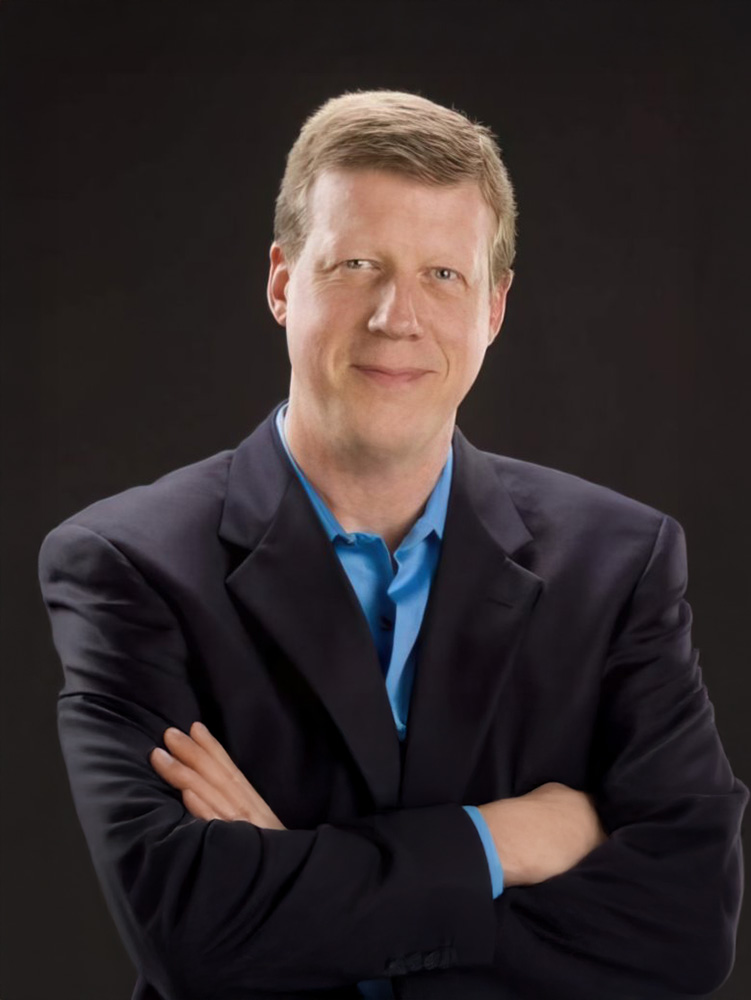
Paul Hynek occupies an unusual position in contemporary UAP culture. He is not an astronomer following directly in his father’s profession, nor is he chiefly known for discovering a single case, producing an instrumented UAP dataset or leading a long-running field investigation. His significance lies instead in translation. He grew up inside the intellectual and domestic world of astronomer J. Allen Hynek, developed an independent career in finance, technology and entertainment, and later returned to the UAP subject as a family historian, television consultant, author, organisational officer and advocate for stronger standards of evidence.
That background gives Paul Hynek unusual access to the private history surrounding one of the most consequential figures in twentieth-century UAP research. It also requires careful boundaries. His proximity to J. Allen Hynek gives particular value to his recollections of family life and his father’s character, but it does not by itself confer scientific authority. Paul’s formal expertise lies primarily in business, finance, software and entertainment technology. His later interests extend into consciousness, psychedelic experience and interdimensional interpretations of UAP, areas in which his views are exploratory rather than established scientific findings.
His biography is therefore best understood not as the story of a son inheriting his father’s scientific role, but of an inheritor gradually constructing a role of his own. Paul Hynek has become a custodian of the Hynek legacy while also attempting to adapt one of its central questions for a different era: how can extraordinary reports be converted into evidence that people outside the experience can independently examine?
Growing up inside the Hynek world
Paul Hynek is one of the five children of astronomer Josef Allen Hynek and Miriam Curtis Hynek. He grew up in Evanston, Illinois, close to Northwestern University, where his father became chairman of the astronomy department and director of the Dearborn Observatory in 1960. Northwestern’s own archival records document J. Allen Hynek’s academic career, his astronomical research, his UAP files and the sometimes uneasy relationship between his growing public identity as a UAP investigator and the university environment around him.
Paul has described a childhood in which the unusual became domestic. His bedroom contained large quantities of his father’s UAP material, and witnesses, researchers and other visitors appeared at the Hynek home frequently enough that discussions of anomalous aerial reports could seem ordinary to the children. In later interviews, he has characterised conversation with his father as an intellectually expansive experience in which unusual questions could be considered without automatically being endorsed. These recollections are retrospective testimony, but they help explain why Paul’s later thinking combines respect for empirical investigation with a willingness to entertain unconventional possibilities. (Gire, 2019).
The historical setting was extraordinary. J. Allen Hynek began consulting for the United States Air Force in 1948 during the period of Project Sign and continued through the Air Force’s successive investigative programmes. The National Archives distinguishes the sequence clearly: Project Sign began in late 1947, Project Grudge followed, and Project Blue Book began in March 1952 and continued until December 1969. The records associated with these three successive programmes encompass 12,618 reported sightings from 1947 through 1969, of which 701 were officially classified as unidentified. Those figures are the Air Force’s accounting of its own records, not a final determination of what every unresolved report represented.
For Paul and his siblings, however, the figure at the centre of this institutional history was first their father. Paul has recalled observing how J. Allen approached people who reported extraordinary experiences. Rather than beginning by ridiculing or confronting them, he tried to make witnesses comfortable, then returned to important details from different angles to test consistency. Whatever conclusions followed, the witness first had to be heard accurately. That approach would later echo in Paul’s own efforts to distinguish respect for testimony from acceptance of a witness’s interpretation.
The classification that escaped into popular culture
J. Allen Hynek’s best-known methodological contribution was his classification system for reported UAP encounters. He divided reports into categories that included nocturnal lights, daylight objects and radar-visual cases, while close encounters were classified according to proximity and reported effects. A close encounter of the first kind involved a nearby observation, a second-kind encounter included effects on the environment, equipment, animals or witnesses, and a third-kind encounter involved the reported observation of an entity. The categories organised the characteristics of a report. They did not determine what had caused it.
This distinction became important to Paul Hynek’s later thinking. His father’s system described what sort of encounter a witness reported, not how strong the evidence supporting that report might be. A dramatic entity encounter might depend entirely on testimony, while a less visually spectacular event could theoretically be supported by radar, multiple independent observers or physical traces. Paul would eventually focus on that gap and ask whether anomalous experiences could be classified not only by type, but by the quality of evidence generated by them.
The terminology also escaped the specialist literature and entered global popular culture through Steven Spielberg’s 1977 film Close Encounters of the Third Kind. J. Allen Hynek served as a technical adviser and appeared briefly in the film. Turner Classic Movies identifies Hynek’s work and terminology as direct influences on the production. Paul has subsequently discussed meeting Spielberg and has treated the film as an important moment in the cultural reframing of UAP, particularly because it presented contact as potentially complex rather than automatically hostile.
That intersection of investigation and representation would later become significant in Paul’s own career. Few UAP families have been as closely connected to both the historical case record and the machinery through which anomalous phenomena are transformed into mass entertainment.
Education and a career outside UAP research
Paul Hynek did not train as an astronomer. Institutional biographies report that he earned a BA in French from the University of Illinois, an MA in International Studies through the University of Pennsylvania’s Joseph H. Lauder Institute and an MBA from the Wharton School. His professional trajectory consequently developed through finance, entrepreneurship, software and entertainment technology rather than astrophysics or aerospace science.
That difference is essential when assessing his later UAP role. Paul possesses first-hand biographical authority concerning his own upbringing and his interactions with his father. He also has documented expertise in finance, start-up development and entertainment technology. When he discusses theoretical physics, the external reality of altered-state entities or the possibility of interdimensional intelligence, however, those views should be understood as interdisciplinary interpretation rather than conclusions derived from his formal academic specialisation.
His professional biographies describe decades of work with start-ups and financial modelling. WorkingNation currently identifies him as its chief financial officer and credits him with creating financial-projection software used by numerous early-stage companies. Promotional estimates of the amount raised with the software vary significantly. Hollywood Disclosure Alliance cites more than $1 billion, WorkingNation gives more than $1.5 billion and the Monroe Institute gives more than $2 billion. The variation means the precise total should not be treated as independently audited, although the underlying role in start-up financial planning is consistently reported across the sources.
Giant Studios and virtual production
By January 2012, the University of Pennsylvania’s Lauder Institute identified Hynek as Director of Business Affairs at Giant Studios and chairman of the Lauder Alumni Council. Giant Studios specialised in motion capture and virtual production, fields that became increasingly important to large-scale digital filmmaking.
Institutional and professional biographies credit Hynek with helping Giant Studios acquire ownership of important virtual-production technology and with involvement in its later relationship with James Cameron’s production interests. These claims are consistently repeated in Hynek’s organisational biographies, although many of the detailed descriptions ultimately derive from professional profiles rather than independent histories of the transaction. His documented Giant Studios position itself is supported independently by the Lauder Institute.
The entertainment work offers useful context for understanding Hynek’s later role in UAP media. Virtual production exists at a boundary between measurement and representation. Human movement is recorded, converted into data and used to build convincing visual worlds. That experience does not constitute UAP research, but it gave Hynek sustained exposure to the ways in which technology can transform raw information into imagery that audiences experience as real.
This distinction became particularly relevant once he became involved in dramatizations of his father’s life. UAP history is unusually vulnerable to the collapse of documentary fact into cultural memory. A scene created for dramatic purposes can, after repeated circulation, become mistaken for an event that actually occurred. Hynek’s later media work has repeatedly placed him at that boundary.
Returning publicly through Project Blue Book
The History drama Project Blue Book, which premiered in January 2019, brought Paul Hynek into a much more visible relationship with his father’s UAP legacy. The programme used historical cases as foundations for a fictionalised continuing drama about J. Allen Hynek’s Air Force work.
Paul and his brother Joel served as consultants. Series creator David O’Leary told Vassar College that the brothers were involved to help the production portray their father accurately, while Paul has described receiving scripts during pre-production, visiting the set and providing feedback. The brothers’ participation did not make the series a documentary, and Paul repeatedly acknowledged its fictionalisation.
Paul also made a cameo in the second season. In a 2026 interview, the programme’s creators confirmed that he appears in the episode built around the making of Close Encounters of the Third Kind, creating a deliberate generational echo of his father’s cameo in Spielberg’s film.
His involvement extended beyond protecting J. Allen Hynek’s characterisation. Paul and Joel also tried to influence the portrayal of their mother, Miriam “Mimi” Hynek. Paul has argued that she should not be reduced to a passive spouse orbiting a famous husband. Actress Laura Mennell separately said that conversations with the Hynek brothers and their family photographs helped her modify the television character in response to what they told her about the real Mimi.
The episode illustrates one of Paul Hynek’s most defensible historical roles. Archives preserve correspondence, dates, institutional decisions and research files. Family witnesses preserve another layer: habits, personality, relationships and the emotional texture of a household. Neither form of evidence should replace the other. Used together, they can produce a richer historical account than either can supply alone.
Editing and preserving J. Allen Hynek’s published legacy
Paul Hynek has also participated in bringing his father’s major books back into circulation. Publisher records credit him and other Hynek family members with the foreword to the 2019 MUFON edition of The Hynek UFO Report. Simon & Schuster lists that edition as published on 21 November 2019. Other catalogue metadata has differed slightly on release dating and editorial attribution, but the publisher record supports Paul’s involvement in the edition.
Paul wrote the foreword to the 2023 edition of The UFO Experience, his father’s influential 1972 study in which the close-encounter framework was developed for a general readership. He also supplied the foreword to the 2023 edition of The Edge of Reality, originally published by J. Allen Hynek and Jacques Vallée in 1975.
These contributions are best understood as archival and interpretive stewardship rather than new UAP case investigations. Paul can add information about how his father spoke privately, how the family experienced his changing public role and how subsequent generations have interpreted his work. Yet later recollection can also impose coherence on developments that were uncertain while they were occurring. For that reason, Paul’s testimony is strongest when read alongside J. Allen Hynek’s papers, correspondence, contemporary interviews and institutional records.
A proposed scale for evidential strength
Paul Hynek’s most distinctive methodological project has been developed with his brother Joel. Their starting point is a limitation they perceive in their father’s close-encounter framework: it describes the reported nature of an encounter but does not separately rate the strength or character of the evidence generated by it.
In interviews and presentations, Paul has described a proposed “verifiable evidence” protocol intended to encourage people undergoing unusual experiences to seek information that could later be checked by independent observers. Examples he has discussed include asking an apparently superior intelligence for specific mathematical information, an unknown future event or a concealed random number that can subsequently be verified. The framework has also been described using categories such as technological, biological or knowledge-based evidence, with suggested qualitative levels including “curious”, “compelling” and “convincing”.
The proposal is consistent with the general scientific preference for specific, independently reproducible and prospectively defined evidence. It also addresses a persistent difficulty in anomalous-experience research. A sincere witness may report an experience of overwhelming personal significance, yet its evidential value to an outside observer can remain limited if nothing occurred that can be checked independently.
Hynek’s proposal attempts to change that situation by making the experiencer an active collector of potentially discriminating information. In principle, a result that is highly specific, unavailable to the witness beforehand and reproducible under controlled conditions would carry more evidential weight than a general message or symbolic impression.
The framework nevertheless remains developmental. A scientifically mature version would require publicly defined scoring criteria, procedures established before an encounter, safeguards against information leakage, controls for chance matching, independent replication and measures of agreement between evaluators. No peer-reviewed validation instrument establishing the Hynek protocol as a scientific standard was identified in the sources reviewed for this biography. Paul himself has continued to describe the project as a work in progress.
Its conceptual importance lies in the question it asks. J. Allen Hynek classified the morphology of reported encounters. Paul and Joel Hynek are attempting to classify what an encounter leaves behind in evidential terms. Whether the resulting framework becomes scientifically useful will depend on operationalisation and testing rather than family pedigree.
The UFO Technology Handbook
In 2021, Paul Hynek and technology writer Lamont Wood published The UFO Technology Handbook. The book begins with reported capabilities associated with UAP and asks what forms of engineering might theoretically reproduce them. Google Books identifies Micro Publishing Media as the publisher and gives a publication date of 2 August 2021.
Its method is best described as technological extrapolation. The book does not establish that a particular observed object uses a specific propulsion mechanism. Instead, it treats reported characteristics as prompts for asking what developments in physics, materials or engineering would be necessary if the descriptions were substantially accurate.
That approach has an obvious limitation. Every technical extrapolation inherits the uncertainty of the observation from which it begins. If distance, velocity, size or acceleration were misestimated, a calculated engineering requirement may describe a performance that never actually occurred.
The book is therefore most useful as speculative technology analysis rather than as evidence of recovered or demonstrated UAP engineering. It nevertheless shows how Hynek’s technology background shaped his approach to the subject. Instead of beginning with a preferred origin hypothesis, he often begins by asking what an observed capability would imply if the report were accurate.
Consciousness and the expansion of Hynek’s outlook
Over time, Paul Hynek’s thinking has moved beyond a straightforward extraterrestrial spacecraft model. He has publicly expressed interest in interdimensional interpretations, post-biological intelligence, altered states of consciousness and the possibility that apparently separate anomalous phenomena could share a deeper underlying structure.
In his July 2025 interview with Area52, Hynek discussed his father’s legacy alongside altered states, the Monroe Institute, psychedelics, consciousness and the possibility of non-human intelligence. The interview is especially valuable because it shows Paul articulating his own intellectual position rather than merely explaining J. Allen Hynek’s. Relevant sections begin around 50 minutes for psychedelic and contact phenomena, around 55 minutes for the Monroe Institute and around 1 hour 42 minutes for his broader interpretation of what may be occurring.
Hynek has described personal experiences with DMT in which he perceived apparently intelligent presences, experiences of healing and an environment that felt structured and responsive. He has at times interpreted these experiences as potentially offering access to a reality not normally available to waking perception. At the same time, he has acknowledged the alternative possibility that neurochemistry, expectations and prior exposure to particular ideas could influence what users experience.
The evidential distinction is crucial. Hynek’s experience is evidence that he reports having undergone vivid and personally meaningful altered states. His interpretation that some perceived entities or environments could possess an existence independent of his own mind remains a hypothesis. The intensity or apparent reality of an altered state does not, by itself, establish the ontological status of what was perceived.
This tension is central to his current intellectual profile. On one side, Hynek argues for stronger, prospectively verifiable evidence. On the other, some of the experiences that most strongly influence his worldview are deeply subjective. Rather than resolving that contradiction, his current work attempts to use it as a research problem: can an experience that is ordinarily private produce information whose source can be evaluated publicly?
The Monroe Institute and Signalarity
Hynek’s interest in consciousness has also become institutional. As of October 2026, the Monroe Institute lists Paul Hynek as a board member. Its biography describes his interests as spanning consciousness, artificial intelligence, DMT and related areas.
The same profile identifies him as the author of the forthcoming Signalarity: Consciousness Comes Home, a work described as exploring consciousness through fundamental pattern recognition and developed in collaboration with artificial intelligence. As of October 2026, the institute continues to describe the book as forthcoming. Its arguments therefore cannot yet be evaluated as a completed publication.
The Monroe association has personal historical resonance because Hynek has recalled encountering consciousness-oriented ideas and figures during childhood through the wider intellectual circles around his father. That continuity is relevant to his intellectual biography, but it does not validate any specific model of consciousness. It shows how themes encountered early in life later became central to his own work.
Current organisational roles and public advocacy
As of October 2026, Hollywood Disclosure Alliance identifies Hynek as its chief financial officer. WorkingNation likewise lists him as chief financial officer, while the Monroe Institute lists him as a board member. These positions demonstrate that his contemporary public identity extends across UAP advocacy, nonprofit finance, technology and consciousness-related organisations.
Several current institutional biographies also identify Hynek as an adjunct professor at Pepperdine University, although the wording varies between finance and accounting, finance and cryptocurrency, or more general descriptions of business teaching. WorkingNation, Hollywood Disclosure Alliance and the Monroe Institute all currently make that identification. Because a current Pepperdine-hosted personal faculty profile was not located during the present source review, the most precise formulation is that current institutional biographies identify him as an adjunct professor at Pepperdine rather than treating the appointment as separately verified here by the university itself.
His Hollywood Disclosure Alliance role reflects a broader belief that entertainment influences whether witnesses and professionals feel able to discuss anomalous experiences publicly. Hynek has argued that fictional works can reduce social stigma and widen cultural willingness to consider the subject, even though fiction itself provides no evidential support for a UAP claim. In a 2020 interview later republished by Somewhere in the Skies, he explicitly described Close Encounters of the Third Kind and Project Blue Book as fictional works capable of opening public dialogue.
His own family history illustrates both sides of that process. Popular drama can make an obscure scientific classification globally familiar and introduce historical investigators to new generations. It can also combine cases, invent motives and create scenes that viewers later remember as history. Hynek’s media role is therefore most valuable when cultural storytelling remains visibly separated from the documentary record.
Influence and limitations
Paul Hynek’s demonstrable contribution to UAP history is different from his father’s. He has not produced a comparable scientific case catalogue or decades-long programme of field investigation. His significance is concentrated in four areas: preserving family testimony about J. Allen and Mimi Hynek, helping return important Hynek texts to circulation, mediating between UAP history and popular media, and developing a proposal for rating the evidential output of anomalous encounters.
There are corresponding limitations. Hynek has not published a substantial body of peer-reviewed UAP research in astronomy, physics or neuroscience. Several prominent descriptions of his business achievements come from organisations with which he is affiliated and therefore require appropriate caution. His interdimensional and consciousness-oriented ideas remain interpretations, and his DMT experiences remain personal testimony rather than independent demonstrations of external intelligence.
His family relationship is also both an asset and a methodological complication. Paul knew J. Allen Hynek in circumstances unavailable to later historians. Yet a son remembering his father decades later is not a neutral instrument. Memory is reconstructive, and later events can reshape the meaning attached to earlier experiences. Family recollection is therefore particularly valuable when it is correlated with contemporary documents rather than treated as a replacement for them.
What distinguishes Hynek’s strongest recent work is his recognition of this evidential problem. He does not simply argue that extraordinary testimony should be believed because it is sincere. Nor does he argue that testimony is worthless because it is subjective. His proposed solution is to ask whether encounters can be approached in ways that deliberately produce information capable of independent verification.
Legacy in formation
Paul Hynek should not be regarded simply as J. Allen Hynek’s successor. The two men occupy different intellectual positions. J. Allen Hynek’s historical authority emerged from astronomy, Air Force consulting, case analysis and the construction of a classification system that became foundational to UAP investigation. Paul Hynek’s public role has emerged through family memory, finance, software, virtual production, publishing, television and consciousness-oriented inquiry.
His most securely established legacy is that of a custodian and recaster. He has helped preserve the human context around J. Allen Hynek’s work, contributed to renewed editions of his father’s books, challenged oversimplified portrayals of his mother, advised a major dramatization of Project Blue Book and attempted to develop an evidential counterpart to the close-encounter system.
His more ambitious ideas remain unresolved. Interdimensional intelligence, post-biological forms of mind and psychedelic access to independent entities are possibilities within his current worldview, not established conclusions. Their importance to his biography lies in showing how far his intellectual trajectory has moved from simply explaining his father’s work.
Paul Hynek now stands at an unusual junction in UAP history. Behind him lies the world of Project Sign, Project Grudge, Project Blue Book, witness interviews and close-encounter categories. Around him lies an entertainment environment capable of both preserving and distorting that history. Ahead lies his attempt to connect anomalous experience, consciousness, artificial intelligence and verifiable evidence.
Whether that attempt produces an enduring methodological contribution will depend on what happens next: publication, explicit protocols, controlled tests, independent replication and evidence that survives outside the experience of the individual witness. That standard is demanding. It is also, in an important sense, recognisably Hynek.
Selected works and editorial contributions
Hynek, J. A. (2019). The Hynek UFO Report (P. Hynek, S. Hynek, R. Hynek, J. Hynek, & R. Hynek, Foreword). MUFON. (Original work published 1977).
Hynek, J. A. (2023). The UFO Experience: Evidence Behind Close Encounters, Project Blue Book, and the Search for Answers (P. Hynek, Foreword). MUFON/Red Wheel Weiser. (Original work published 1972).
Hynek, J. A., & Vallée, J. (2023). The Edge of Reality: Two Scientists Evaluate What We Know of the UFO Phenomenon (P. Hynek, Foreword). MUFON/Red Wheel Weiser. (Original work published 1975).
Hynek, P., & Wood, L. (2021). The UFO Technology Handbook. Micro Publishing Media.
Hynek, P. (forthcoming). Signalarity: Consciousness Comes Home. Publication details remain forthcoming as of October 2026.
References
- Center for UFO Studies. (n.d.). Classification systems. CUFOS.
- Gire, D. (2019, January 7). Evanston native advises TV show “Project Blue Book” on his UFO expert dad. Daily Herald.
- Hollywood Disclosure Alliance. (n.d.). Board of directors: Paul Hynek. Retrieved October 18, 2026.
- Hynek, P., & Wood, L. (2021). The UFO Technology Handbook. Micro Publishing Media.
- Lauder Institute. (2012, January 12). Lauder Podcast 27: Paul Hynek. University of Pennsylvania.
- Monroe Institute. (n.d.). Paul Hynek. Retrieved October 18, 2026.
- National Archives and Records Administration. (2019, December 5). Public interest in UFOs persists 50 years after Project Blue Book termination.
- Northwestern University. (n.d.). J. Allen Hynek (1910–1986) papers. Archival and Manuscript Collections.
- O’Connor, B. (2025, February 4). Proving your supernatural encounter [Interview with Paul Hynek]. The Observer. Republished by Nexus Newsfeed.
- Ramsay, C. (Host). (2025, July 11). “What My Father Knew About UFOs” – Paul Hynek – DEBRIEFED ep. 45 [Video interview]. Area52.
- Red Wheel/Weiser. (2023). The Edge of Reality. Publisher catalogue.
- Red Wheel/Weiser. (2023). The UFO Experience. Publisher catalogue.
- Turner Classic Movies. (n.d.). Close Encounters of the Third Kind.
- Vassar College. (2019). In search of the unknown: David O’Leary ’02 and his star-studded UFO series.
- WorkingNation. (n.d.). Paul Hynek. Retrieved October 18, 2026.
SEO keywords
Paul Hynek biography, Paul Hynek UAP, J. Allen Hynek son, J. Allen Hynek legacy, Project Blue Book, Hynek close encounters, Paul Hynek evidence protocol, verifiable evidence protocol, Paul Hynek Project Blue Book, The UFO Technology Handbook, Paul Hynek consciousness, Paul Hynek DMT, Monroe Institute Paul Hynek, Signalarity, interdimensional UAP hypothesis, Hollywood Disclosure Alliance, UAP evidence standards, UAP popular culture